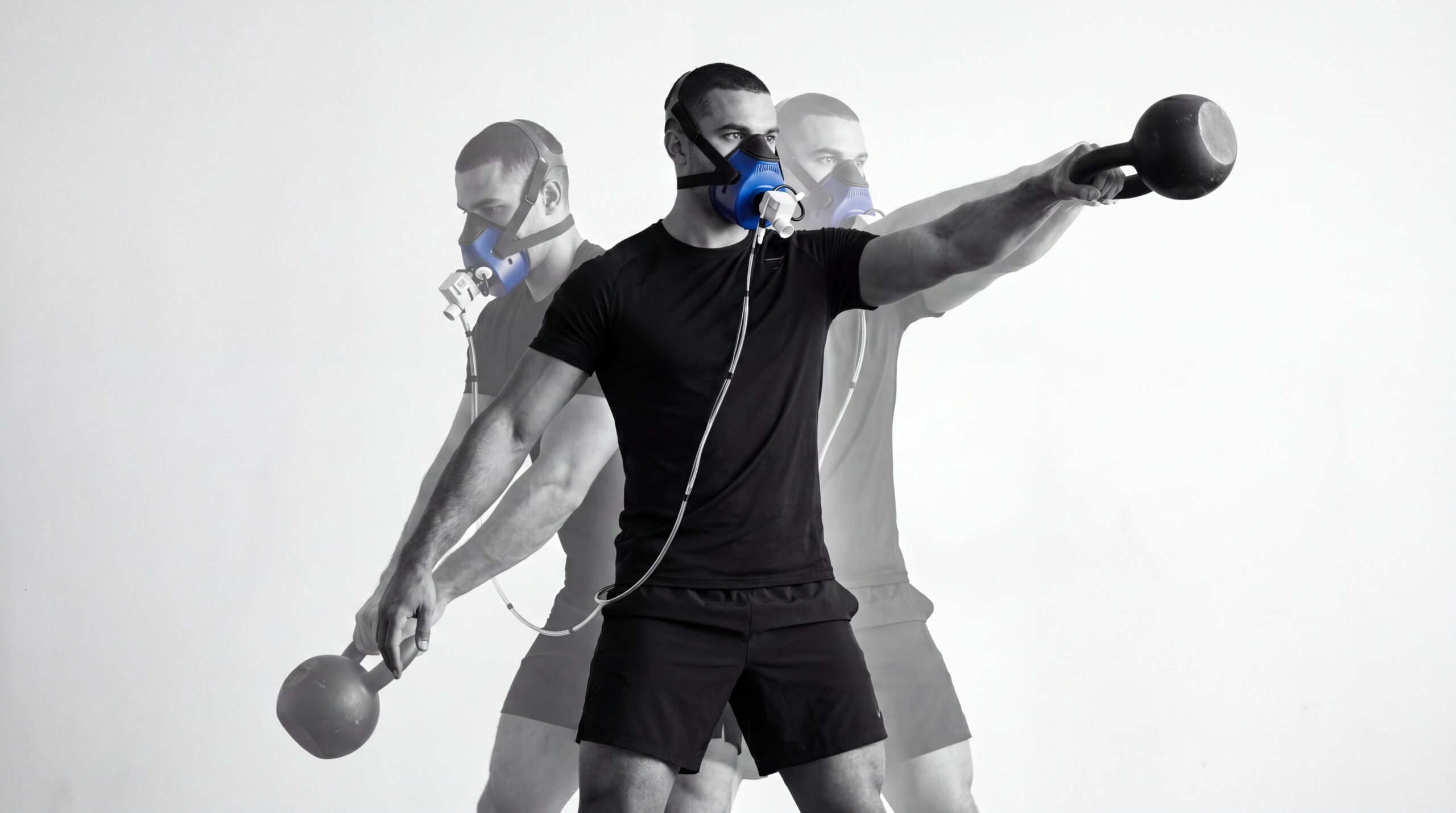
In CrossFit and high-intensity functional fitness, your VO2 Max is your engine. It determines how fast you recover between efforts, how long you can sustain high-output work, and whether you are gasping at the halfway point of a WOD or pacing through it with composure. Every competitive CrossFit athlete who has plateaued knows the feeling: strength is there, skills are there, but the aerobic system cannot keep up. That is a VO2 Max problem.
VO2 Max for CrossFit is uniquely important because the sport demands both a high aerobic ceiling and the ability to repeatedly access it during mixed-modal, varied-duration workouts. Unlike pure endurance sports where you sustain a steady effort, CrossFit requires constant oscillation between near-maximal output and partial recovery — a pattern that is brutally VO2 Max–dependent.
This guide covers why VO2 Max matters for CrossFit and HIIT performance, how to test it properly, what scores competitive athletes should target, and the specific training strategies that improve VO2 Max for CrossFit without sacrificing the strength and skill work that makes the sport unique.
Why VO2 Max Matters for CrossFit Performance
CrossFit competition workouts (WODs) and HIIT sessions create repeated spikes in oxygen demand. Each time you transition from a heavy barbell movement to a run, row, or bike, your cardiovascular system must rapidly deliver oxygen to clear metabolic byproducts, replenish phosphocreatine stores, and sustain aerobic energy production. The higher your VO2 Max for CrossFit, the faster these processes occur — and the faster you recover between efforts within a workout.
The Aerobic Engine in CrossFit
Many CrossFit athletes underestimate how aerobic the sport actually is. Research on competitive CrossFit workouts shows that even short WODs (8–12 minutes) derive 70–80% of their energy from aerobic metabolism. Longer workouts (15–30+ minutes) are overwhelmingly aerobic. A high VO2 Max for CrossFit means:
Faster intra-workout recovery. Between high-intensity sets — after a heavy clean and jerk complex or a max-effort row interval — your body needs oxygen to clear lactate, regenerate ATP, and restore homeostasis. A higher VO2 Max accelerates this recovery, allowing you to maintain output across the workout rather than fading in the back half.
Higher sustainable power output. Your lactate threshold and sustained work capacity are derived from your VO2 Max. A bigger aerobic engine means your “comfortable hard” pace is faster, allowing you to push harder for longer in every WOD.
Better performance on monostructural elements. Rowing, running, cycling, swimming, and ski erg efforts are directly VO2 Max–limited. CrossFit athletes who neglect aerobic development often find that these elements are their weakest link in competition.
Improved body composition. A well-developed aerobic system improves fat oxidation efficiency. CrossFit athletes with higher VO2 Max values tend to carry less body fat relative to muscle mass — improving power-to-weight ratio for bodyweight movements.
Metabolic Flexibility: The Hidden VO2 Max Variable for CrossFit
Beyond raw VO2 Max, metabolic flexibility — the ability to efficiently switch between fat and carbohydrate oxidation as exercise intensity changes — is especially relevant for CrossFit. A metabolically flexible athlete burns fat efficiently during lower-intensity portions of a workout, preserving glycogen for high-intensity bursts.
Metabolic flexibility is measured through the respiratory exchange ratio (RER) during a VO2 Max test. A PNOĒ metabolic test quantifies your metabolic flexibility at rest and across all exercise intensities, revealing whether your body is efficiently managing fuel sources or relying too heavily on carbohydrate at every intensity — a common problem in CrossFit athletes who train predominantly at high intensity.
What Is a Good VO2 Max for CrossFit?
VO2 Max values in CrossFit athletes tend to be moderate-to-high but rarely elite by pure endurance sport standards, reflecting the sport’s emphasis on strength and mixed modalities alongside aerobic capacity.
VO2 Max Benchmarks for Male CrossFit Athletes
| Level | VO2 Max (mL/kg/min) |
| Recreational CrossFitter | 38–45 |
| Regular box athlete (3–5x/week) | 45–52 |
| Competitive local/regional | 52–60 |
| CrossFit Games qualifier | 60–70 |
| CrossFit Games elite | 65–75+ |
VO2 Max Benchmarks for Female CrossFit Athletes
| Level | VO2 Max (mL/kg/min) |
| Recreational CrossFitter | 32–40 |
| Regular box athlete (3–5x/week) | 40–46 |
| Competitive local/regional | 46–54 |
| CrossFit Games qualifier | 54–62 |
| CrossFit Games elite | 58–68+ |
These are approximate ranges. Individual values depend on body composition, training history, and genetic factors.
Why CrossFit VO2 Max Values Are Lower Than Pure Endurance Athletes
CrossFit Games athletes typically have VO2 Max values 5–15 mL/kg/min below elite marathon runners or cyclists. This is expected: CrossFit athletes carry significantly more muscle mass (which increases body weight and lowers relative VO2 Max) and allocate training time to strength, gymnastics, and skill work rather than pure aerobic development. A CrossFit athlete with a VO2 Max of 65 mL/kg/min at 90 kg bodyweight has a massive absolute aerobic capacity — their relative score is “lower” primarily because of their greater lean mass.
This is why VO2 Max for CrossFit should be interpreted alongside body composition data. A PNOĒ test provides both: your VO2 Max and the metabolic context (RMR, body composition implications, fuel utilization) that gives the number meaning in a CrossFit context.
How to Test VO2 Max for CrossFit
The Ideal VO2 Max Test Protocol for CrossFit Athletes
CrossFit athletes should test VO2 Max using a modality that reflects their training — typically a treadmill run or a cycle ergometer. While CrossFit involves multiple modalities, VO2 Max is best measured during a single sustained modality that progressively increases to maximal effort.
A graded exercise test on a treadmill with breath-by-breath gas analysis (such as a PNOĒ VO2 Max test) provides:
- VO2 Max — your aerobic ceiling
- Ventilatory thresholds (VT1 and VT2) — defining your personalized training zones for aerobic development
- RER and metabolic flexibility — how efficiently you switch between fat and carbohydrate fuel
- Fat oxidation rate and crossover point — identifying the intensity at which your body shifts fuel sources
- O₂ pulse — cardiovascular efficiency, relevant for repeated high-output efforts
- RMR — caloric baseline for nutrition planning around heavy training loads
- Biological age — an integrated health and performance metric
Why CrossFit Athletes Need Metabolic Testing
CrossFit programming often prioritizes intensity over aerobic development. Many CrossFit athletes train at near-maximal effort 4–6 days per week with limited Zone 2 work, leading to poor metabolic flexibility, incomplete recovery, and aerobic capacity that plateaus well below genetic potential.
A VO2 Max test for CrossFit reveals whether your aerobic engine is the limiter in your fitness — and if so, which specific component (lungs, heart, or mitochondria) needs attention. This data prevents the common CrossFit mistake of “just doing more WODs” when the real solution is targeted aerobic development.
How to Improve VO2 Max for CrossFit: Training Strategies
Improving VO2 Max for CrossFit requires strategic aerobic development that complements — rather than competes with — strength, skill, and WOD training. The goal is building a bigger engine without sacrificing the attributes that make you a complete CrossFit athlete.
Strategy 1: Add Dedicated VO2 Max Intervals for CrossFit
Assault Bike / Ski Erg / Rower 4×4 VO2 Max Intervals 4 minutes at 90–95% max HR on the assault bike, ski erg, or rower, followed by 3 minutes of easy movement. Repeat 4 times. This protocol is the gold standard for VO2 Max improvement and translates directly to CrossFit monostructural performance.
Perform this 2 times per week, ideally on days separated from heavy strength sessions by at least 6 hours. Using CrossFit-specific modalities (assault bike, rower, ski erg) provides aerobic development within movement patterns you already use in competition.
Strategy 2: Build Zone 2 Base to Improve VO2 Max for CrossFit
This is the most underutilized strategy in CrossFit. Zone 2 training — sustained aerobic work at conversational pace, below VT1 — drives mitochondrial growth, improves fat oxidation, enhances cardiac stroke volume, and accelerates recovery between training sessions.
How to add Zone 2 for CrossFit athletes: 2–4 hours per week of Zone 2 work, performed as separate sessions from CrossFit training. Easy running, cycling, rowing, or brisk walking all work. The critical rule: stay below VT1 intensity. If you cannot talk in complete sentences, you are going too hard and no longer training Zone 2.
Most CrossFit athletes resist Zone 2 training because it feels “too easy.” But the aerobic base it builds is precisely what allows higher sustained output in WODs and faster recovery between sessions — directly improving VO2 Max for CrossFit over time.
Accurate Zone 2 requires metabolic testing. Heart rate formulas and perceived effort are unreliable for CrossFit athletes, who are accustomed to high-intensity work and often misjudge what “easy” feels like. A PNOĒ VO2 Max test identifies your exact VT1 heart rate, ensuring Zone 2 training actually stays in Zone 2.
Strategy 3: Improve VO2 Max for CrossFit Through WOD Design
Structure WODs to include dedicated aerobic development:
Long monostructural pieces. Once per week, include a 20–40 minute sustained effort on the rower, bike, or running at moderate intensity. This builds the aerobic capacity that supports VO2 Max for CrossFit without interfering with strength work.
EMOM-style aerobic work. Every Minute On the Minute workouts with moderate-intensity, mixed-modal movements (rowing calories, assault bike calories, box step-ups) sustained for 20–30 minutes develop aerobic capacity within a CrossFit-familiar format.
Negative-split WODs. Program WODs that require pacing: start at moderate effort and increase intensity across rounds. This trains the aerobic system to sustain and build output — a direct VO2 Max for CrossFit application.
Strategy 4: Prioritize Recovery to Support VO2 Max for CrossFit
CrossFit culture often glorifies high training density — 5–6 hard sessions per week with minimal recovery. This approach directly undermines VO2 Max improvement by maintaining chronic sympathetic nervous system activation and preventing the recovery needed for aerobic adaptation.
To improve VO2 Max for CrossFit, build in genuine rest days (not “active recovery” that is actually another workout), prioritize 7–9 hours of sleep, and monitor HRV to track recovery status. PNOĒ’s integration with wearable HRV data helps CrossFit athletes identify when accumulated fatigue is suppressing VO2 Max gains.
Nutrition for CrossFit VO2 Max
Fuel the Aerobic Engine
CrossFit athletes often underfuel relative to their training demands, suppressing metabolic rate and VO2 Max adaptation. A PNOĒ RMR test measures your exact caloric needs at rest. From there, total daily expenditure can be calculated to ensure adequate fuel for both strength and aerobic development.
Optimize Metabolic Flexibility for CrossFit
If your PNOĒ test reveals poor metabolic flexibility (high resting RER, early crossover to carbohydrate oxidation), nutritional adjustments can improve your body’s ability to use fat as fuel — preserving glycogen for high-intensity CrossFit efforts and improving both VO2 Max and WOD performance.
Carbohydrate Timing for CrossFit VO2 Max Training
VO2 Max interval sessions deplete glycogen rapidly. Ensure adequate carbohydrate intake before these sessions (2–3 hours prior) and consider intra-workout carbohydrate for combined sessions lasting over 75 minutes. Zone 2 sessions can be performed in a lower-carb state to enhance fat oxidation adaptation, but VO2 Max sessions require full glycogen availability.
Common VO2 Max Mistakes CrossFit Athletes Make
Going hard every day. The “constantly varied, high intensity” mantra, applied without periodization, produces CrossFit athletes with moderate aerobic capacity and chronic fatigue. Improving VO2 Max for CrossFit requires deliberate intensity distribution — not random programming.
Neglecting monostructural aerobic work. If your only cardio is what happens within WODs, your VO2 Max for CrossFit will plateau. Dedicated aerobic sessions (Zone 2 and VO2 Max intervals) on separate modalities are essential.
Ignoring metabolic testing. CrossFit athletes train multiple energy systems simultaneously, making it impossible to assess aerobic capacity from workout performance alone. A VO2 Max test for CrossFit provides the objective data needed to program aerobic development effectively.
Confusing being “gassed” with having a low VO2 Max. Feeling winded during a WOD can result from poor breathing mechanics, poor pacing, inadequate warm-up, or poor metabolic flexibility — not necessarily low VO2 Max. Metabolic testing differentiates between these causes.
Avoiding Zone 2 because it feels too easy. Zone 2 training does not feel like CrossFit. It is not supposed to. It is the investment that pays dividends in every WOD, every competition, and every decade of your athletic career. CrossFit athletes who embrace Zone 2 develop aerobic engines that their peers cannot match.
Build a Bigger CrossFit Engine With VO2 Max Testing
Your VO2 Max for CrossFit is the foundation that everything else rests on. A bigger aerobic engine means faster recovery between efforts, higher sustainable output in WODs, better performance on monostructural elements, and the ability to train harder and more frequently without breaking down.
A PNOĒ VO2 Max test gives CrossFit athletes the data to build that engine systematically: your VO2 Max, ventilatory thresholds, metabolic flexibility, fat-burning profile, RMR, and a personalized plan that integrates aerobic development with your existing CrossFit training.
References
- Bellar D, Hatchett A, Judge LW, et al. “The Relationship of Aerobic Capacity, Anaerobic Peak Power and Experience to Performance in CrossFit Exercise.” Biology of Sport. 2015;32(4):315–320.
- Helgerud J, Høydal K, Wang E, et al. “Aerobic High-Intensity Intervals Improve VO2max More Than Moderate Training.” Medicine & Science in Sports & Exercise. 2007;39(4):665–671.
- Seiler S. “What Is Best Practice for Training Intensity and Duration Distribution in Endurance Athletes?” International Journal of Sports Physiology and Performance. 2010;5(3):276–291.
- Tsekouras YE, Tambalis KD, Sarras SE, et al. “Validity and Reliability of the New Portable Metabolic Analyzer PNOE.” Frontiers in Sports and Active Living. 2019;1:24. https://www.frontiersin.org/articles/10.3389/fspor.2019.00024
- Mandsager K, Harb S, Cremer P, et al. “Association of Cardiorespiratory Fitness With Long-term Mortality Among Adults Undergoing Exercise Treadmill Testing.” JAMA Network Open. 2018;1(6):e183605. https://jamanetwork.com/journals/jamanetworkopen/fullarticle/2707428
- Feito Y, Heinrich KM, Butcher SJ, Poston WS. “High-Intensity Functional Training (HIFT): Definition and Research Implications for Improved Fitness.” Sports. 2018;6(3):76.
- Milanović Z, Sporiš G, Weston M. “Effectiveness of High-Intensity Interval Training (HIT) and Continuous Endurance Training for VO2max Improvements.” Sports Medicine. 2015;45(10):1469–1481.
Related Posts

Repeated Sprint Ability: Why Soccer Is Really an Aerobic Sport

Soccer Player VO2 Max: How World Cup Athletes Compare to You

Brain Fog and Metabolism: What Your Breath Reveals About Focus