PNOĒ BREATH ANALYSIS

Understand Human Physiology
Through Breath.

Measure 23 biomarkers through non-invasive breath analysis, in 8 minutes.
PNOĒ measures how the body consumes oxygen, produces carbon dioxide, uses fuel, responds to increasing physical demand, and performs across the respiratory, cardiovascular, and metabolic systems.
Turn those measurements into actionable insights for longevity, nutrition, training, recovery, and measurable progress over time.

THE SCIENCE OF BREATH ANALYSIS

Your Metabolism Leaves a Signal in Every Breath.

The body continuously consumes oxygen to produce energy and releases carbon dioxide as part of that process.
Indirect calorimetry measures this respiratory gas exchange.
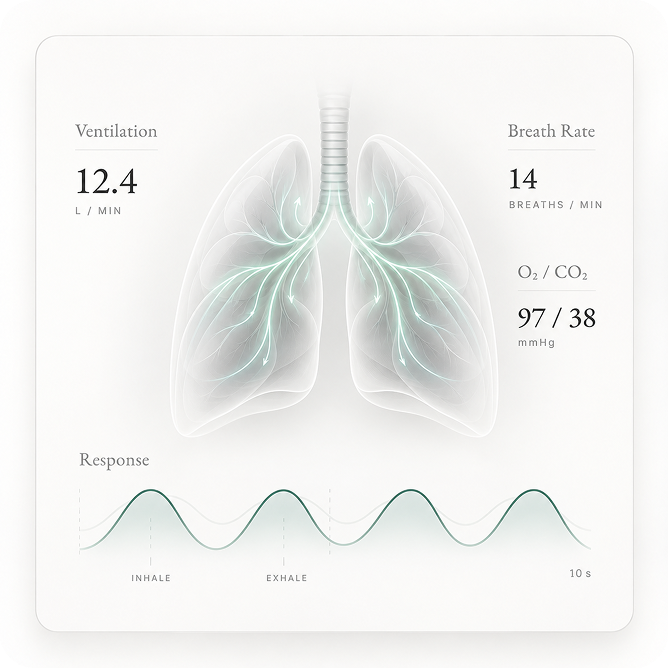
By analyzing oxygen consumption (VO2), carbon dioxide production (VCO2), ventilation, breathing patterns, and related physiological signals, PNOĒ can quantify how the body responds at rest and as physical demand increases.

These measurements provide objective information about:
YOUR BREATH. MULTIPLE SYSTEMS.

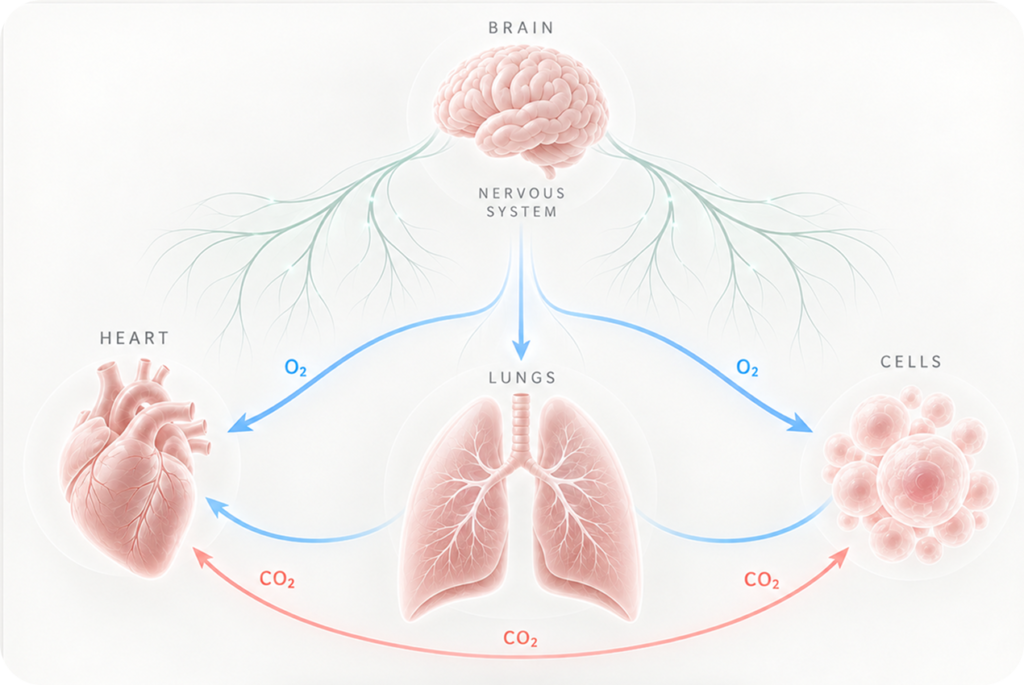
Follow Oxygen From the Lungs to Energy Production.

Cardiorespiratory fitness and metabolic performance depend on multiple physiological systems working together.
LUNGS
Exchange oxygen and carbon dioxide between the air and the bloodstream.
HEART & CIRCULATION
Pump and transport oxygen-rich blood throughout the body.
CELLS
Use oxygen to produce the energy needed for activity and daily function.
PNOĒ measures how this oxygen pathway responds as demand changes, through ventilation, heart rate, oxygen consumption, carbon dioxide production, fuel utilization, and other metabolic and cardiorespiratory signals.

23 METABOLIC & CARDIORESPIRATORY METRICS

One Test Four Dimensions of Physiology.

PNOĒ captures 23 metrics that show how the body breathes, circulates oxygen, uses energy, and responds to exercise.

CARD 01 — PULMONARY & RESPIRATORY FUNCTION

9 metrics

PULMONARY & RESPIRATORY FUNCTION

Breathing Frequency

Tidal Volume

Minute Ventilation

Forced Expired Volume

VE/VCO2 — Ventilatory Efficiency

End-Tidal CO2

End-Tidal O2

Fraction of Expired CO2

Fraction of Expired O2

Understand

breathing dynamics, ventilation, gas exchange, and respiratory response to physiological demand.

CARD 02 — CARDIOVASCULAR & CIRCULATORY RESPONSE

4 metrics

CARDIOVASCULAR & CIRCULATORY RESPONSE

Heart Rate

Low Frequency HRV

High Frequency HRV V

Very Low Frequency HRV

O2 Pulse

VO2/BF — Oxygen-to-Breathing-Frequency Ratio

Understand

cardiovascular response and the relationship between oxygen consumption, heart rate, and breathing.

CARD 03 — METABOLIC FUNCTION & ENERGY UTILIZATION

8 metrics

METABOLIC FUNCTION & ENERGY UTILIZATION

VO2 Peak / VO2 Max

VCO2 — Carbon Dioxide Production

Respiratory Exchange Ratio — RER

Caloric Burn

Fat Oxidation

Carbohydrate Oxidation

Mechanical Efficiency

Crossover Point

Understand

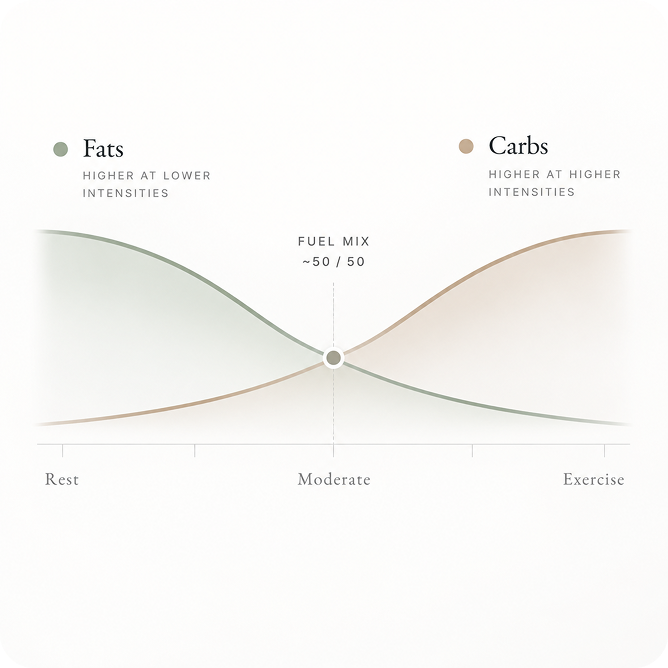
aerobic capacity, energy expenditure, fuel use, metabolic response, and the transition from greater fat reliance toward carbohydrate reliance as demand changes.

CARD 04 — PERFORMANCE & THRESHOLD MARKERS

2 metrics

PERFORMANCE & THRESHOLD MARKERS

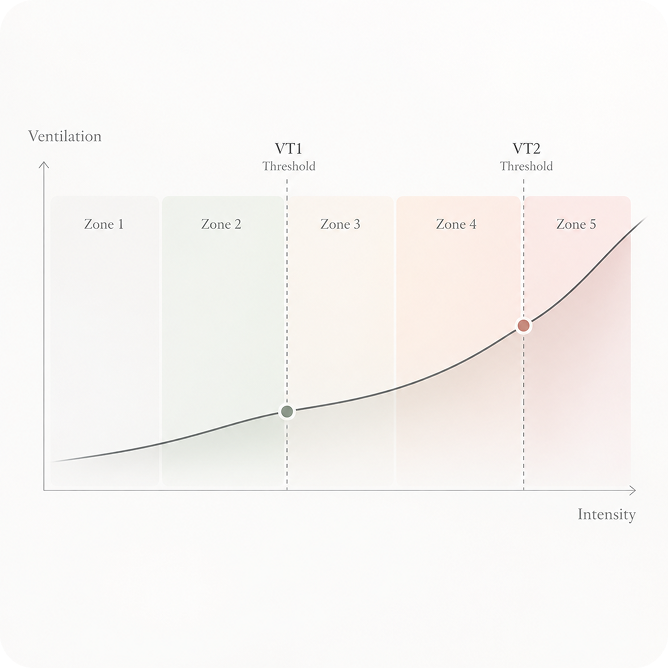
Aerobic Threshold

Anaerobic Threshold

Understand

cardiovascular response and the relationship between oxygen consumption, heart rate, and breathing.

FROM 23 BIOMARKERS TO THE INSIGHTS THAT MATTER

What Can One Breath Test Reveal?

More Than A Performance Metric.

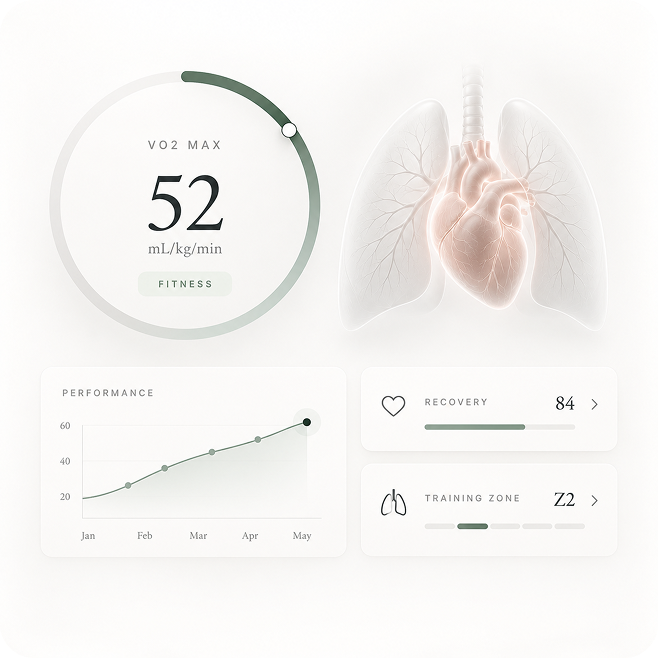
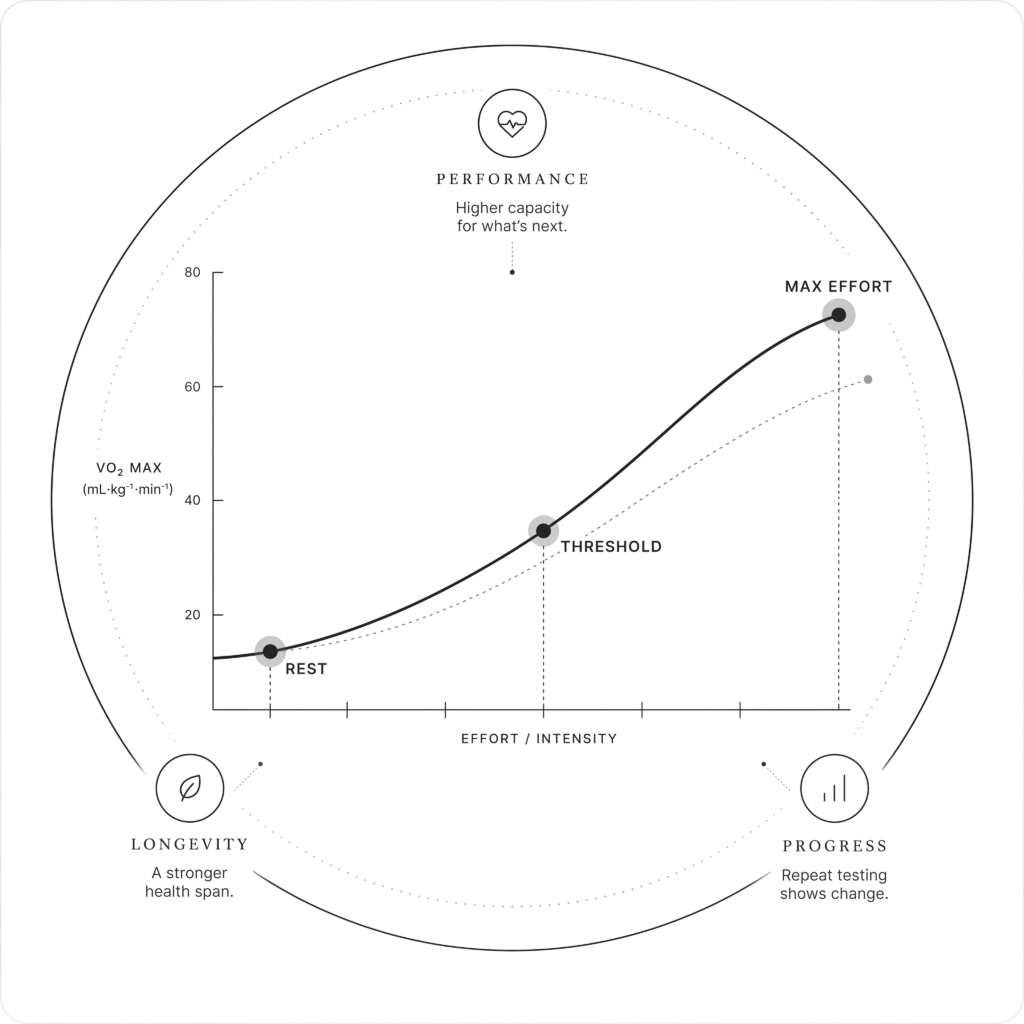
VO2 Max Is One of the Most Important Measures of Cardiorespiratory Fitness.
VO2 Max reflects the integrated ability of the respiratory, cardiovascular, and metabolic systems to take in, transport, and use oxygen during exercise.
And its relevance extends well beyond athletic performance.
The American Heart Association has highlighted cardiorespiratory fitness as an important clinical vital sign and notes that low cardiorespiratory fitness is strongly associated with cardiovascular disease and all-cause mortality. Its scientific statement also describes cardiorespiratory fitness as potentially a stronger predictor of mortality than several traditional risk factors.

LONGEVITY

Cardiorespiratory fitness is strongly associated with long-term health outcomes.

PERFORMANCE

VO2 Max quantifies aerobic capacity.

PROGRESS

Repeat testing provides an objective way to track change.
TWO TESTS. TWO DIFFERENT QUESTIONS.

RESTING METABOLIC TESTING

What Does the Body Need at Rest?

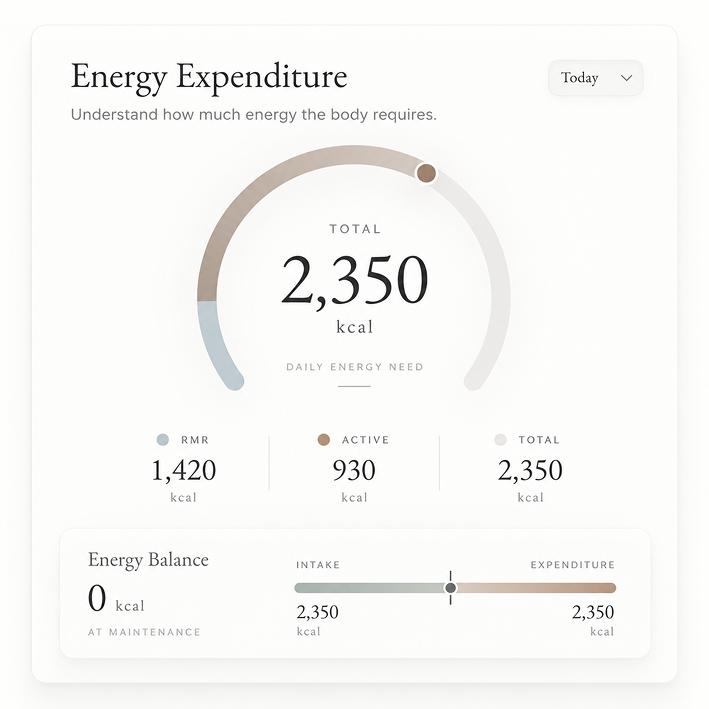
Assess resting energy requirements and fuel utilization to inform more individualized nutrition and weight-management strategies.

Key outputs can inform:

ACTIVE METABOLIC TESTING

What Happens as Demand Increases?

Follow the body’s metabolic, cardiorespiratory, and ventilatory response as exercise intensity rises.

Key outputs can inform:

INDEPENDENTLY VALIDATED

Measured Against an Established Metabolic Cart.

PNOĒ has been evaluated in peer-reviewed research against the COSMED Quark CPET metabolic system. In a validation study, researchers reported strong correlations between the two systems for key respiratory measurements:

98%

VO2 correlation

98%

VCO2 correlation

98%

Ventilation correlation
The study also reported no significant differences between the systems for VO2, VCO2, ventilation, or respiratory quotient across the tested exercise intensities, with strong test-retest reliability for PNOĒ.

THE NEW PNOĒ TESTING EXPERIENCE

Advanced Metabolic Testing. Demand Increases?

PNOĒ brings sophisticated breath analysis into a portable testing experience designed for real-world health, wellness, and performance environments. The latest PNOĒ experience removes much of the equipment traditionally associated with metabolic testing.

No vest.

No complex cable setup.

A lightweight, streamlined mask-based experience designed to make metabolic testing faster and easier to integrate into everyday practice.

12. FAQ

Questions

What is indirect calorimetry?

Indirect calorimetry measures respiratory gas exchange, primarily oxygen consumption and carbon dioxide production, to quantify energy expenditure and provide insight into metabolism and fuel utilization.

PNOĒ captures 23 metabolic and cardiorespiratory metrics spanning respiratory function, cardiovascular response, metabolism and fuel use, and physiological thresholds.

VO2 Max measures maximal oxygen utilization during exercise and is a key measure of cardiorespiratory fitness. Higher cardiorespiratory fitness is strongly associated with better long-term health outcomes.

Respiratory Exchange Ratio is the relationship between carbon dioxide produced and oxygen consumed. It provides information about the body’s relative reliance on fat and carbohydrate for energy.

They represent important physiological transitions as exercise intensity rises and can be used to help establish individualized training intensities and zones.

Resting metabolic rate reflects the energy the body requires to maintain basic physiological function at rest. Metabolic testing can help practitioners individualize calorie and nutrition strategies around measured energy needs.

PNOĒ uses VO2 Max in relation to age-based reference data to provide a biological-age perspective on cardiorespiratory fitness.

Resting testing focuses primarily on energy requirements and fuel utilization at rest. Active testing evaluates how metabolism, ventilation, cardiovascular response, and fuel utilization change as exercise demand increases.

A PNOĒ assessment can be completed in 10 minutes, depending on the testing protocol.

Retesting frequency depends on the client’s goals and program. We recommend every 2-3 months. Reassessment can help practitioners objectively measure change and adjust nutrition, training, recovery, or other recommendations accordingly.

Yes. Peer-reviewed research comparing PNOĒ with the COSMED Quark CPET reported strong agreement across key respiratory variables, including correlations of 0.98 for VO2, VCO2, and ventilation.