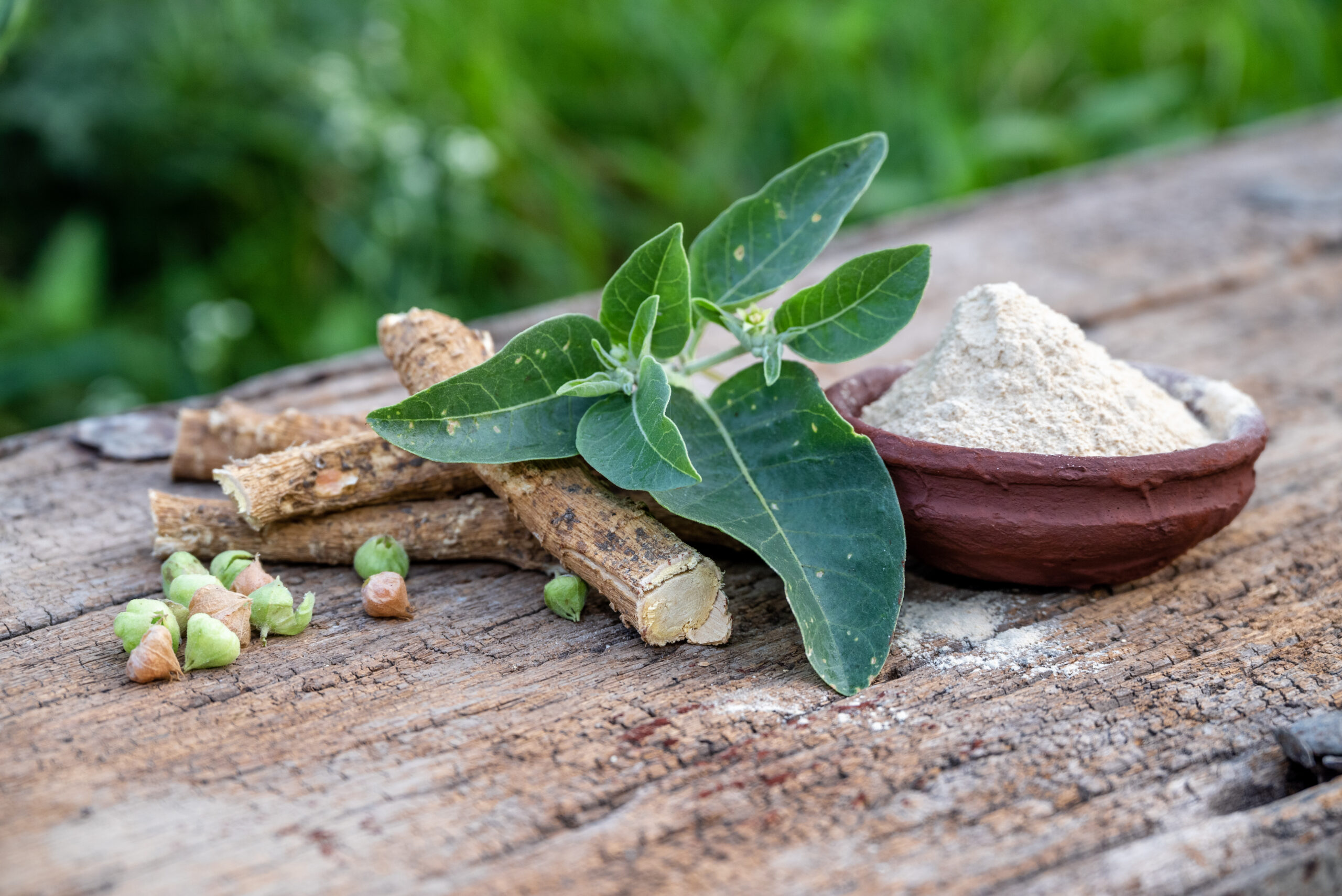
Ashwagandha is everywhere — in supplement stacks, wellness podcasts, and the daily routines of biohackers and stressed-out professionals alike. Marketed as a natural solution for stress, anxiety, sleep, and hormonal balance, it has become one of the most popular adaptogens in the world.
But behind the marketing, a more nuanced picture is emerging. Clinical trials consistently show that ashwagandha lowers cortisol levels. What’s less clear is whether that cortisol reduction reliably translates into the metabolic benefits people are hoping for. Understanding ashwagandha, cortisol, and metabolism — and knowing how to measure what actually changes — is the difference between informed supplementation and expensive guesswork.
What Ashwagandha Is and How It Works
Ashwagandha (Withania somnifera) is a plant used in Ayurvedic medicine for thousands of years, classified as an adaptogen — a substance that helps the body adapt to stress and normalize physiological processes. Its primary bioactive compounds are withanolides, particularly Withaferin A, which appear to interact with multiple biological pathways.
The mechanism most relevant to metabolic health is ashwagandha’s effect on the hypothalamic-pituitary-adrenal (HPA) axis — the body’s central stress response system. When you experience stress, the HPA axis triggers cortisol release. Chronically elevated cortisol is associated with increased abdominal fat storage, insulin resistance, disrupted sleep, suppressed immune function, and reduced muscle protein synthesis.
According to a 2025 systematic review published in PMC, ashwagandha has the most profound effect on the HPA axis among commonly studied adaptogenic supplements. The proposed mechanisms include direct interaction with glucocorticoid receptors in the brain, GABAergic activity that promotes relaxation and sleep, and modulation of key stress neurotransmitters.
The Cortisol Evidence: Strong and Consistent
The strongest clinical evidence for ashwagandha centers on cortisol reduction. A 2025 systematic review and meta-analysis published in BJPsych Open analyzed 15 randomized controlled trials involving 873 participants. The findings were clear: ashwagandha supplementation significantly reduced cortisol levels, anxiety scores (Hamilton Anxiety Rating Scale), and perceived stress (Perceived Stress Scale) at 8 weeks of treatment.
A separate 2025 meta-analysis published in SAGE Journals found a statistically significant cortisol reduction of -1.16 µg/dL across seven RCTs (488 participants). However — and this is important — the same analysis found no significant impact on perceived stress scores. In other words, ashwagandha consistently lowers the biological marker of stress (cortisol) but doesn’t always change how stressed people feel.
An earlier landmark RCT using 300mg of a full-spectrum ashwagandha extract twice daily for 60 days found a 27.9% reduction in serum cortisol compared to placebo — a substantial effect size. Participants also showed improvements in stress-related subscales covering somatic symptoms, anxiety, insomnia, and social dysfunction.
A 2019 RCT using 240mg of a standardized extract (Shoden) once daily for 60 days confirmed significant reductions in morning cortisol and DHEA-S levels compared to placebo, with no adverse events reported.
The Metabolic Connection: Where It Gets Complicated
Here’s where the conversation matters for anyone tracking their health with data rather than feelings: cortisol directly affects metabolism.
Chronically elevated cortisol promotes visceral fat accumulation by increasing lipogenesis (fat creation) in abdominal tissue. It impairs insulin sensitivity, disrupts glucose regulation, and accelerates muscle protein breakdown — all of which lower resting metabolic rate over time. Cortisol also interferes with sleep quality, which compounds the metabolic damage through disrupted growth hormone secretion and increased ghrelin (the hunger hormone).
A 2024 review published in Taylor & Francis examined ashwagandha’s potential role in stress-induced obesogenic eating behaviors. The authors found evidence that ashwagandha may support weight management through cortisol reduction, enhanced leptin and insulin sensitivity (primarily from Withaferin A in preclinical models), and reduced food cravings. One RCT cited in the review showed that ashwagandha supplementation led to weight loss that appeared to be mediated by reduced stress, cortisol, and food cravings.
A comprehensive 2025 narrative review in PMC examining ashwagandha’s mechanisms across health and sports performance concluded that the compound shows consistent effects on HPA axis modulation and cortisol reduction, with emerging evidence for benefits in body composition, testosterone levels, sleep quality, and exercise recovery — though the authors noted that specific mechanisms require further exploration and more diverse population studies.
However, it’s important to note: most of these metabolic effects are indirect. Ashwagandha doesn’t directly boost metabolic rate or improve fat oxidation. It reduces cortisol, which may create conditions where metabolic health can improve — if the other pieces (exercise, nutrition, sleep) are in place.
What Ashwagandha Can’t Tell You
This is the critical gap. Ashwagandha may lower your cortisol. But lowering cortisol doesn’t automatically mean your metabolism is improving. Without data, you can’t know whether:
- Your resting metabolic rate has actually changed
- Your fat oxidation efficiency has improved
- Your cardiovascular fitness (VO2 Max) is trending in the right direction
- The cortisol reduction is translating into better insulin sensitivity and fuel utilization
These are all measurable markers — and they’re exactly what a PNOĒ breath test captures.
RMR shows whether your baseline energy expenditure is where it should be. If chronic stress has been suppressing your metabolism, a recovering RMR over time would confirm that the intervention (ashwagandha, lifestyle changes, or both) is working.
Fat oxidation rate reveals how well your cells use fat for fuel. Cortisol-driven metabolic dysfunction often shifts the body toward carbohydrate dependence and fat storage. Improved fat oxidation after stress reduction would be a meaningful metabolic signal.
Metabolic flexibility — the ability to switch between fuel sources — is a direct proxy for insulin sensitivity and mitochondrial health. If ashwagandha’s cortisol reduction is having a real metabolic effect, this marker should improve.
Without these measurements, you’re relying on how you feel — which, as the research shows, doesn’t always correlate with what’s happening biologically.
The Bottom Line: Promising, But Measure the Results
Ashwagandha has real science behind it. The cortisol reduction is consistent and clinically significant across multiple high-quality trials. The downstream metabolic effects — better body composition, improved insulin sensitivity, reduced stress-driven eating — are plausible and supported by emerging evidence, though mostly through indirect mechanisms.
But “plausible” and “proven for you specifically” are two different things. The supplement industry thrives on generalizations. Your body runs on specifics.
If you’re taking ashwagandha to improve your metabolic health — not just to feel calmer — then you need metabolic data to confirm it’s working. A breath test before you start, and again 8–12 weeks later, gives you the proof that no supplement label can provide.
SOURCES
- PMC — “Effects of Ashwagandha Supplements on Cortisol, Stress, and Anxiety Levels in Adults: A Systematic Review and Meta-Analysis” (2025): https://pmc.ncbi.nlm.nih.gov/articles/PMC12242034/
- PubMed — “Dual impact of Ashwagandha: Significant cortisol reduction but no effects on perceived stress — A systematic review and meta-analysis” (2025): https://pubmed.ncbi.nlm.nih.gov/40746175/
- PubMed — “An investigation into the stress-relieving and pharmacological actions of an ashwagandha extract” (2019): https://pubmed.ncbi.nlm.nih.gov/31517876/
- PMC — “A Prospective, Randomized Double-Blind, Placebo-Controlled Study of Safety and Efficacy of a High-Concentration Full-Spectrum Extract of Ashwagandha Root in Reducing Stress and Anxiety in Adults”: https://pmc.ncbi.nlm.nih.gov/articles/PMC3573577/
- PMC — “Withania somnifera (Ashwagandha) supplementation: a review of its mechanisms, health benefits, and role in sports performance” (2025): https://pmc.ncbi.nlm.nih.gov/articles/PMC11800443/
- Taylor & Francis — “Investigating the Impact of Ashwagandha and Meditation on Stress Induced Obesogenic Eating Behaviours” (2024): https://www.tandfonline.com/doi/full/10.1080/27697061.2024.2401054
- Examine.com — “Ashwagandha might reduce cortisol, but not perceived stress” (2025): https://examine.com/research-feed/study/9KVxz0/
Related Posts
Creatine Beyond the Gym: Why It’s Becoming a Longevity Essential

Are Peptides the New Supplements? Why Metabolic Data Should Come First