Interval training for VO2 max is the most effective and time-efficient way to raise your aerobic ceiling. To improve VO2 max, you need accumulated time working at or near maximal oxygen consumption — and interval training is the only practical way to get there, since sustaining true VO2 max effort continuously is impossible for more than a few minutes.
But not all interval training for VO2 max is created equal. The duration of work intervals, the intensity, the recovery structure, and weekly frequency all determine whether your sessions drive real adaptation or just produce fatigue. This guide provides five proven protocols for interval training for VO2 max, with exact prescriptions you can use immediately.
The Science Behind Interval Training for VO2 Max
VO2 max improves when the cardiovascular and metabolic systems are forced to operate at maximal capacity repeatedly. Interval training for VO2 max achieves this by alternating high-intensity work periods (at 90–100% of max heart rate) with recovery periods that allow partial restoration before the next effort. This structure accumulates 10–20 minutes of near-maximal oxygen consumption per session — a stimulus that continuous moderate training cannot match.
The key adaptations driven by interval training for VO2 max include increased cardiac stroke volume, improved oxygen extraction at the muscle level, greater mitochondrial density, and enhanced ventilatory efficiency. A 2015 meta-analysis by Milanović et al. confirmed that high-intensity interval training produces significantly greater VO2 max improvements than moderate-intensity continuous training across all fitness levels.
The 5 Best Interval Training Workouts for VO2 Max
1. The 4×4 Norwegian Protocol
Structure: 4 minutes at 90–95% max HR, 3 minutes active recovery at 60–70% max HR. Repeat 4 times.
This is the most researched protocol for interval training for VO2 max. Studies show 7–15% gains over 8–12 weeks when performed twice weekly. The 4-minute work interval is long enough to drive oxygen consumption to near-maximal levels, and the active recovery keeps heart rate elevated — reducing the ramp-up time on each subsequent interval. If you are new to interval training for VO2 max, this is the protocol to start with.
2. 30/30 Microintervals for VO2 Max
Structure: 30 seconds hard (approximately mile or 1500m race effort), 30 seconds easy. Repeat continuously for 20–30 minutes.
Microintervals keep oxygen consumption elevated near VO2 max throughout the entire session because the brief recovery prevents significant heart rate drop-off. This format of interval training for VO2 max accumulates massive time at the right intensity while feeling psychologically manageable — an excellent option for athletes building toward longer intervals.
3. 5×3-Minute Intervals for VO2 Max
Structure: 3 minutes at 95–100% of the power or pace at VO2 max (pVO2max), 3 minutes easy recovery. Repeat 5 times.
Slightly shorter work intervals allow a higher average intensity, making this protocol ideal for athletes whose VO2 max is limited by peripheral (muscular) rather than central (cardiac) factors. Total accumulated time at VO2 max intensity: approximately 15 minutes. This is a natural progression once the 4×4 protocol starts feeling manageable.
4. Billat-Style Equal Work-Rest Intervals for VO2 Max
Structure: Intervals at vVO2max pace (the speed or power that elicits your VO2 max), with equal-duration recovery at 50% of vVO2max. Work intervals range from 30 seconds to 3 minutes depending on fitness level.
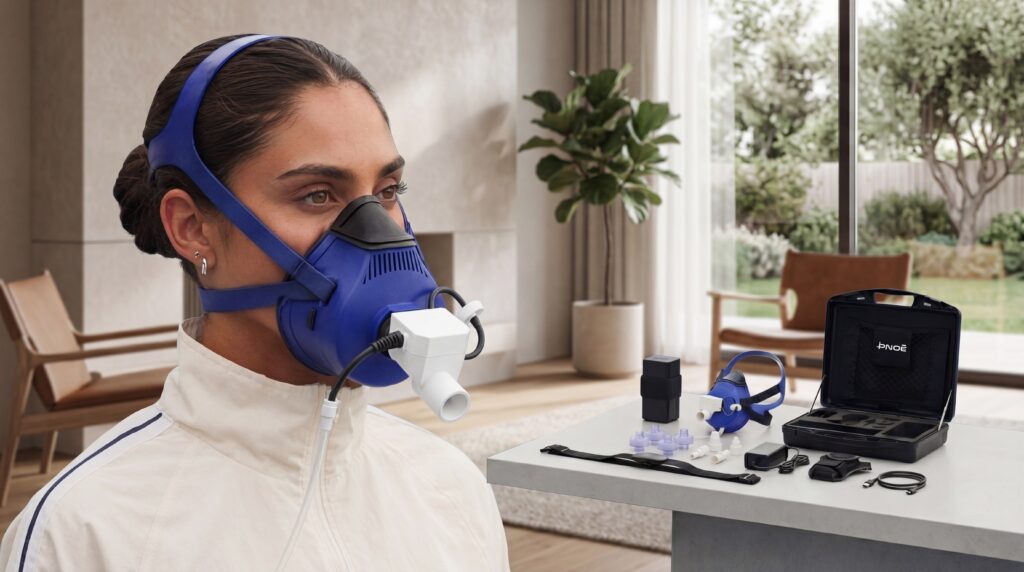
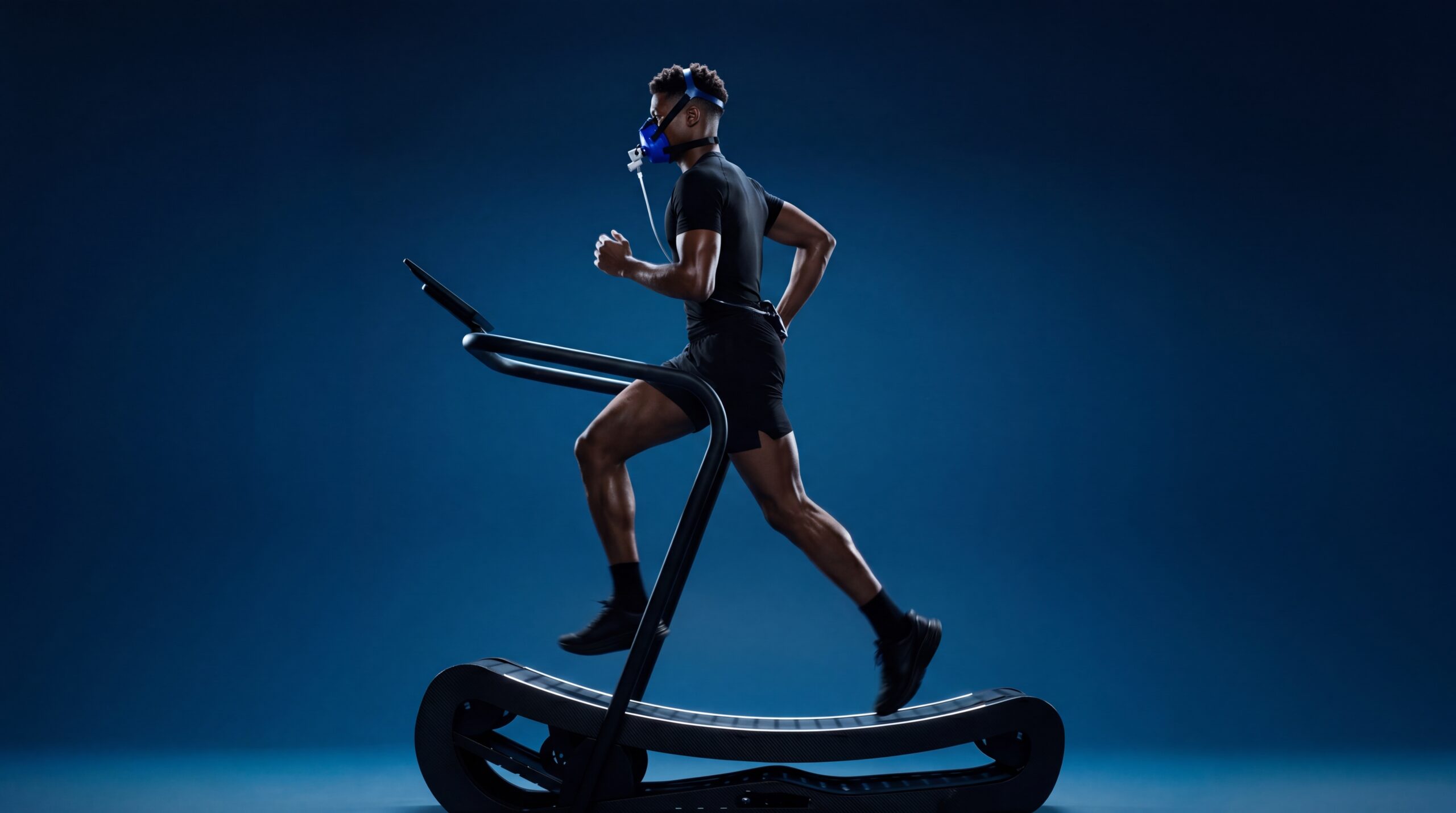
This is the most precisely targeted form of interval training for VO2 max, widely used by elite endurance coaches. It requires knowing your exact vVO2max — information that comes from a metabolic test, not estimation. If you have PNOĒ test data, this protocol lets you train at the exact intensity your physiology needs.
5. Hill Repeat Intervals for VO2 Max
Structure: 60–90 seconds of hard effort up a moderate hill (4–8% grade), walk or jog back down. Repeat 8–12 times.
Hill repeats drive interval training for VO2 max intensity with reduced impact forces compared to flat running, lowering injury risk while delivering the same cardiovascular stimulus. The incline naturally forces higher oxygen consumption and greater muscular recruitment. Particularly useful for runners who find flat speedwork hard on their joints.
How to Get the Most From Interval Training for VO2 Max
Hit the Right Intensity
The single most important factor in interval training for VO2 max is actually reaching VO2 max intensity. If your intervals sit at 80–85% of max heart rate instead of 90–95%, you are training threshold — a useful adaptation, but not the same stimulus. The difference matters.
The problem is that most people do not know their true VO2 max zone. Age-based heart rate formulas (220 minus age) can be off by 10–15 bpm, which means your target zone may be entirely wrong. A PNOĒ metabolic test identifies your actual VO2 max, ventilatory thresholds, and the exact heart rate and pace that correspond to VO2 max intensity — ensuring every session of interval training for VO2 max hits the right target.
Train at the Right Frequency
Two sessions of interval training for VO2 max per week is optimal for most people. Three sessions per week is the upper limit for well-trained athletes with strong recovery capacity. More than that risks overtraining and diminishing returns.
The remaining training days should be filled with Zone 2 base work — easy, conversational-pace exercise. This polarized model (80% easy, 20% hard) consistently produces the best VO2 max outcomes in the research literature. Interval training for VO2 max works best when it sits on top of a strong aerobic foundation, not in place of one.
Progress Over Time
Start with two sessions per week of the 4×4 protocol or 30/30 microintervals. After 4–6 weeks, progress to longer or more intense formats like the 5×3-minute intervals or the Billat protocol. The goal is to gradually increase the total time your body spends at or near VO2 max intensity per session.
Re-test your VO2 max every 8–12 weeks to confirm that your interval training for VO2 max is producing real adaptation. Updated data means updated training zones — which keeps each session precisely calibrated as your fitness improves.
Why Interval Training for VO2 Max Needs Real Data
Generic interval prescriptions can get you started, but they cannot tell you whether your VO2 max is limited by your lungs, your heart, or your mitochondria. They cannot tell you whether you are recovering adequately between sessions. And they cannot confirm whether the work you are doing is actually at VO2 max intensity or just feels hard.
A PNOĒ metabolic test answers all of these questions in a single 10-minute session. You get your measured VO2 max, your precise training zones based on ventilatory thresholds, your resting metabolic rate for nutrition planning, and an AI-generated training plan that prescribes the right interval training for VO2 max protocol based on your specific physiology.
The difference between guessing at intervals and prescribing them from data is the difference between training hard and training smart.
References
- Helgerud J, Høydal K, Wang E, et al. “Aerobic High-Intensity Intervals Improve VO2max More Than Moderate Training.” Medicine & Science in Sports & Exercise. 2007;39(4):665–671. https://pubmed.ncbi.nlm.nih.gov/17414804/
- Milanović Z, Sporiš G, Weston M. “Effectiveness of High-Intensity Interval Training (HIT) and Continuous Endurance Training for VO2max Improvements.” Sports Medicine. 2015;45(10):1469–1481. https://pubmed.ncbi.nlm.nih.gov/26243014/
- Billat LV. “Interval Training for Performance: A Scientific and Empirical Practice.” Sports Medicine. 2001;31(1):13–31. https://link.springer.com/article/10.2165/00007256-200131010-00002
- Seiler S. “What Is Best Practice for Training Intensity and Duration Distribution in Endurance Athletes?” International Journal of Sports Physiology and Performance. 2010;5(3):276–291. https://pubmed.ncbi.nlm.nih.gov/20861519/
- Tsekouras YE, Tambalis KD, Sarras SE, et al. “Validity and Reliability of the New Portable Metabolic Analyzer PNOE.” Frontiers in Sports and Active Living. 2019;1:24. https://www.frontiersin.org/journals/sports-and-active-living/articles/10.3389/fspor.2019.00024/full
Related Posts
Brain Fog and Metabolism: What Your Breath Reveals About Focus
VO2 Max and Brain Health: How Fitness Protects Your Cognition