Improving your VO2 max is one of the single most impactful things you can do for athletic performance, metabolic health, and longevity. But most people who try to improve their VO2 max do it the wrong way — they train randomly, follow generic internet protocols, or hammer high-intensity work without understanding what is actually limiting their VO2 max.
This guide covers the seven strategies that research and clinical practice have proven most effective for VO2 max improvement, explains why a one-size-fits-all approach fails to improve VO2 max efficiently, and shows how metabolic testing identifies the exact target for your training.
Before You Try to Improve VO2 Max: Identify Your Limiter
The most common mistake people make when trying to improve their VO2 max is treating it as a single-system problem. Your VO2 max is not determined by one organ — it reflects the integrated function of the oxygen chain: lungs, heart, and cells. To improve VO2 max effectively, you need to know which link is weakest.
If your lungs limit your VO2 max, you reach ventilatory capacity before your heart or muscles are maxed out. Signs include a very high breathing rate at submaximal intensities and elevated VE/VCO₂ ratios. More HIIT will not improve your VO2 max if your lungs are the bottleneck — you may need respiratory muscle training and breathing pattern correction instead.
If your heart limits your VO2 max, your cardiac output — specifically stroke volume — cannot keep up with oxygen demand. This is the most common VO2 max bottleneck in untrained or moderately trained individuals. Stroke volume–focused training (tempo efforts, hill work, 4×4 intervals) is the best way to improve VO2 max when the heart is the limiter.
If your cells limit your VO2 max, oxygen arrives at the muscles but is not used efficiently. Low mitochondrial density, poor metabolic flexibility, or inadequate capillarization cap your VO2 max. Zone 2 base training and nutrition optimization — not more sprints — are the best strategies to improve VO2 max when cellular function is the issue.
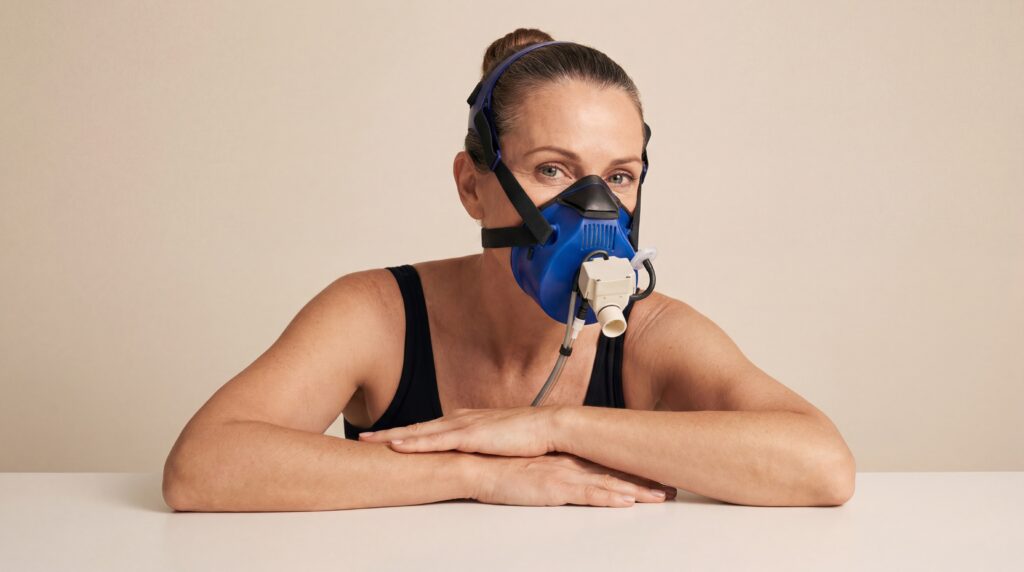
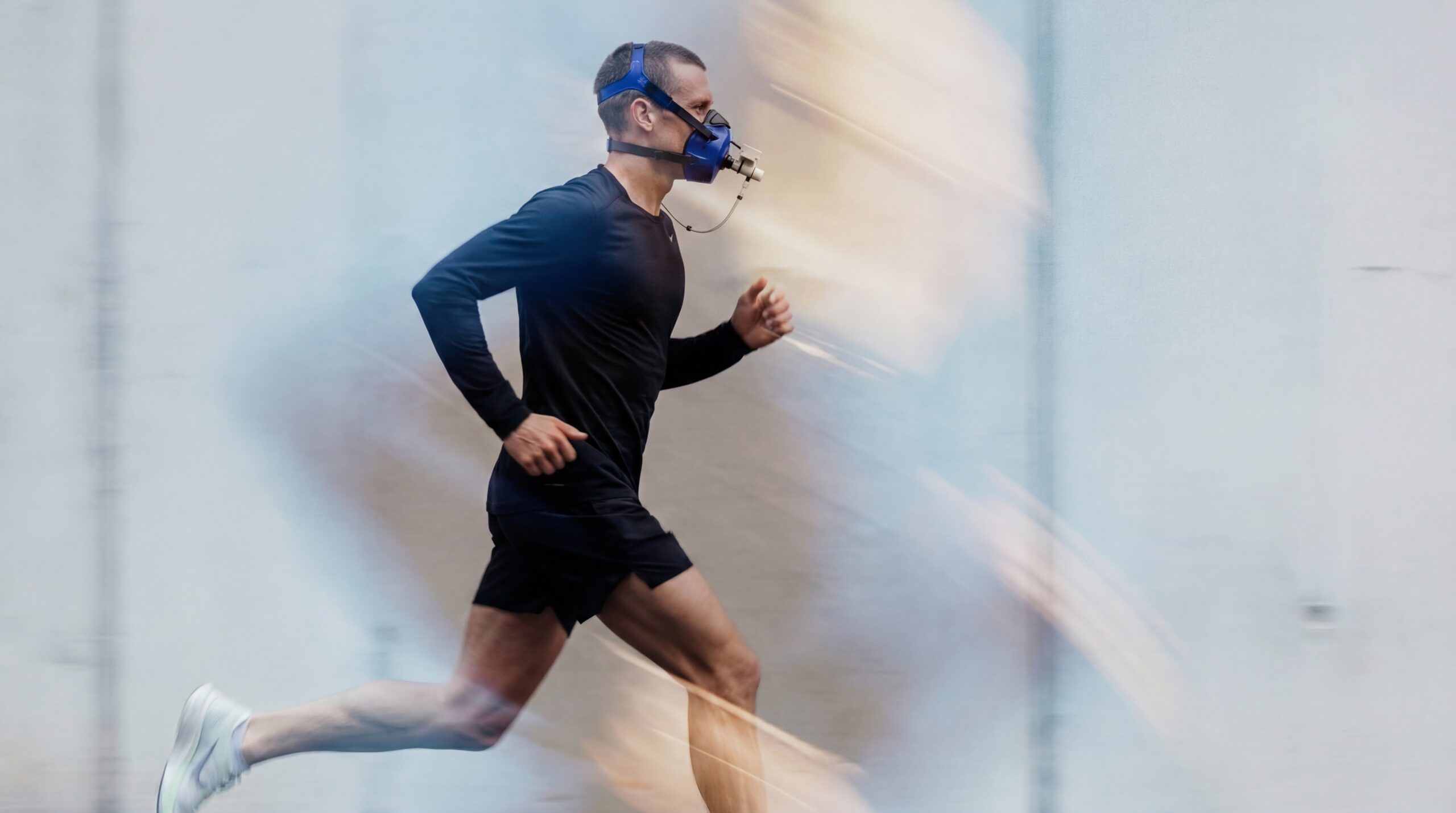
A comprehensive metabolic test like PNOĒ identifies which system limits your VO2 max and generates a personalized plan to address it. Without this data, every attempt to improve VO2 max involves guesswork.
Strategy 1: Use HIIT to Improve VO2 Max
High-intensity interval training is the most time-efficient and well-documented method to improve VO2 max. A 2026 scoping review analyzing 617 exercise training studies confirmed that high-intensity intervals produce the largest VO2 max improvement relative to training time.
The mechanism: to improve VO2 max, you need to spend time training at or near your current VO2 max intensity. HIIT forces the cardiovascular system to operate at 90–100% of maximal capacity, stimulating adaptations in stroke volume, cardiac output, and oxygen extraction.
Best HIIT Protocols to Improve VO2 Max
4×4 Norwegian Intervals — The Gold Standard for VO2 Max Improvement This is the most studied protocol for VO2 max improvement in the exercise physiology literature. Structure: 4 minutes at 90–95% of maximum heart rate, followed by 3 minutes of active recovery at 60–70% max HR. Repeat 4 times.
Research consistently shows this protocol can improve VO2 max by 7–15% over 8–12 weeks when performed 2–3 times per week. It works across all fitness levels — from cardiac rehabilitation patients to elite athletes trying to improve their VO2 max further.
For this protocol to improve VO2 max effectively, the work intervals must genuinely reach 90–95% of max heart rate. This is where training zones from an actual VO2 max test — rather than the age-based 220-minus-age formula — are critical. Age-based formulas can be off by 10–15 bpm, meaning you may not actually be training at VO2 max intensity at all.
30/30 and 60/60 Intervals to Improve VO2 Max Alternating 30–60 seconds of hard effort with 30–60 seconds of easy recovery for 20–30 minutes. These shorter intervals accumulate significant time at VO2 max intensity while feeling more manageable than sustained 4-minute blocks. An excellent starting protocol for people new to VO2 max training.
Billat Protocol — VO2 Max–Specific Intervals Uses intervals at the exact speed or power output that elicits VO2 max (called vVO2max). Work and recovery intervals are equal duration (30 seconds to 3 minutes), with recovery at 50–60% of vVO2max pace. This protocol requires knowing your vVO2max — information that comes directly from a VO2 max test.
How Often Should You Do HIIT to Improve VO2 Max?
Two to three HIIT sessions per week is the evidence-supported range for VO2 max improvement. More than three sessions risks overtraining, accumulated fatigue, and diminishing returns. The remaining training days should be filled with low-intensity Zone 2 work (see Strategy 2).
Strategy 2: Build an Aerobic Base to Improve VO2 Max With Zone 2 Training
If HIIT pushes the VO2 max ceiling higher, Zone 2 training is the foundation that makes VO2 max improvement sustainable. Zone 2 refers to exercise at roughly 60–70% of max heart rate — a conversational pace, just below the first ventilatory threshold (VT1).
How Zone 2 Training Helps Improve VO2 Max
At Zone 2 intensity, the body relies predominantly on aerobic fat oxidation. Sustained Zone 2 work stimulates critical adaptations that improve VO2 max over time:
Mitochondrial biogenesis. Zone 2 is the most potent stimulus for growing new mitochondria. More mitochondria means more cellular machinery for oxygen utilization, which directly improves VO2 max by raising the aerobic ceiling from the cellular level up.
Capillarization. Low-intensity sustained exercise promotes new capillary growth around muscle fibers, improving oxygen delivery at the tissue level. Better oxygen delivery means a higher VO2 max potential.
Cardiac remodeling to improve VO2 max. Zone 2 work improves the heart’s diastolic function and increases stroke volume — more oxygen delivered per heartbeat, directly supporting VO2 max improvement.
Fat oxidation efficiency. Training the body to burn fat spares glycogen, delays fatigue, and improves metabolic flexibility (a key biomarker measured by PNOĒ through the respiratory exchange ratio).
How Much Zone 2 Training to Improve VO2 Max?
The endurance training literature strongly supports a “polarized” model for VO2 max improvement: approximately 75–80% of total training volume at low intensity (Zone 2) and 20–25% at high intensity (HIIT). This distribution is used by virtually all elite endurance athletes and produces better VO2 max outcomes than training at moderate intensity most of the time.
For general fitness, 3–5 hours per week of Zone 2 activity (brisk walking, easy jogging, cycling, swimming) creates the aerobic foundation that makes HIIT effective at improving VO2 max.
The catch: accurate Zone 2 boundaries require VO2 max testing. Heart rate formulas and wearable zone estimates are unreliable. A PNOĒ metabolic test identifies your exact VT1 — the upper boundary of Zone 2 — using gas exchange data, ensuring every hour of base training actually stays in the zone that improves VO2 max.
Strategy 3: Add Strength Training to Support VO2 Max Improvement
Strength training does not directly improve VO2 max in most studies, but it enhances several factors that support VO2 max improvement and expression:
Improved exercise economy to support VO2 max. Stronger muscles require less oxygen to produce a given output. Better economy means you can sustain a higher percentage of your VO2 max before fatiguing — making your VO2 max more usable.
Improved body composition to improve VO2 max. Since VO2 max is expressed per kilogram of body weight, replacing fat with metabolically active muscle tissue improves the ratio. This can improve your VO2 max score even without direct cardiorespiratory gains.
Injury prevention to sustain VO2 max training. You cannot improve VO2 max if injuries sideline you. Strength work builds resilience in joints, tendons, and connective tissues stressed during aerobic training.
Resistance to age-related VO2 max decline. Sarcopenia (muscle loss) accelerates after 40 and contributes to VO2 max decline. Two to three strength sessions per week preserves the muscle mass that supports VO2 max maintenance across your lifespan.
Include compound movements (squats, deadlifts, lunges, presses, rows) at moderate loads for 3–4 sets of 6–12 reps. Schedule strength work on non-HIIT days to minimize interference with your VO2 max training.
Strategy 4: Optimize Nutrition to Improve VO2 Max
What you eat directly affects your ability to improve VO2 max. Several nutritional strategies are evidence-supported:
Fuel Training to Improve VO2 Max
Chronic underfueling sabotages VO2 max improvement. Inadequate caloric intake reduces training quality, impairs recovery, and suppresses metabolic rate. Your resting metabolic rate (RMR) — measured directly by a PNOĒ breath test — tells you exactly how many calories your body needs. Eating in alignment with your RMR ensures you have the energy to train at the intensities needed to improve VO2 max.
Nutrients That Support VO2 Max Improvement
Iron. Essential for hemoglobin and oxygen transport. Even subclinical iron deficiency (low ferritin without anemia) can suppress VO2 max by 5–10%. Monitor ferritin levels, especially if you are female, vegetarian, or a high-volume endurance athlete trying to improve VO2 max.
Dietary nitrate to improve VO2 max. Nitrate from beetroot juice and leafy greens enhances nitric oxide production, improving blood vessel dilation and oxygen delivery. Beetroot supplementation has shown modest but consistent improvements in exercise efficiency — supporting VO2 max gains.
CoQ10. A cofactor in the mitochondrial electron transport chain. Some evidence supports CoQ10 supplementation for mitochondrial efficiency, particularly in older adults working to improve VO2 max.
Omega-3 fatty acids. Support mitochondrial membrane integrity and reduce exercise-induced inflammation, potentially improving recovery between VO2 max training sessions.
Manage Body Composition to Improve VO2 Max
Because VO2 max is expressed per kilogram of body weight, excess body fat directly lowers your VO2 max score. A person who loses 5 kg of fat without any cardiovascular change will see a measurable VO2 max improvement simply from the better ratio.
However, aggressive dieting undermines VO2 max improvement. Rapid weight loss sacrifices muscle, reduces training capacity, and triggers metabolic slowdown. A moderate caloric deficit (300–500 kcal/day) guided by PNOĒ’s RMR data protects lean mass while improving VO2 max through body composition optimization.
Strategy 5: Prioritize Recovery and Sleep to Improve VO2 Max
Training breaks the body down. VO2 max improvement happens during recovery. Neglecting recovery is one of the most common reasons VO2 max plateaus despite consistent training.
Sleep to improve VO2 max. Aim for 7–9 hours per night. Sleep deprivation impairs cardiovascular recovery, suppresses growth hormone, and reduces the training adaptation that drives VO2 max improvement. Studies show that even partial sleep restriction over several days reduces endurance performance.
HRV monitoring for VO2 max training. Track resting heart rate variability as a proxy for recovery status. When HRV drops below your baseline for consecutive days, it signals accumulated fatigue — a lighter training day protects your VO2 max gains.
Periodization to improve VO2 max. Structure three weeks of progressive overload followed by one “deload” week at reduced volume and intensity. This cycle allows the body to consolidate the adaptations that improve VO2 max.
Active recovery. Easy movement on rest days (walking, gentle yoga, swimming) promotes blood flow and accelerates recovery without adding training stress that could undermine VO2 max improvement.
Strategy 6: Consider Altitude Training to Improve VO2 Max
Training or sleeping at moderate altitude (1,500–2,500 meters) stimulates red blood cell production, increasing hemoglobin concentration and oxygen-carrying capacity. More oxygen carriers in the blood improve oxygen delivery to muscles — directly supporting VO2 max improvement.
The “live high, train low” model has shown VO2 max improvements of 1–3% in already well-trained athletes. For the general population trying to improve VO2 max, gains may be larger. Simulated altitude exposure through altitude tents can provide some of the same stimulus, though natural altitude is more robustly studied.
Strategy 7: Test, Train, Retest — The Data-Driven Path to Improve VO2 Max
The single most effective approach to improve VO2 max is treating it as a measurable, trackable metric — not an abstract number. This means:
Baseline VO2 max test: Get a comprehensive metabolic assessment that provides your VO2 max, ventilatory thresholds, RMR, fat oxidation rate, and oxygen chain analysis. This gives you a starting point and identifies the specific limiter you need to address to improve your VO2 max.
Personalized VO2 max training plan: Use the test data to build a program that targets your specific weakness. A generic HIIT plan cannot do this. A personalized plan built from metabolic testing data will improve your VO2 max faster because it addresses the actual bottleneck.
Re-test VO2 max every 8–12 weeks: Measure real physiological change. Did your VO2 max improve? Did ventilatory thresholds shift? Is your RMR stable or declining? Re-testing catches problems early and confirms what is working to improve your VO2 max.
Iterate based on VO2 max data: As your limiter changes — for example, after improving cardiac output, your mitochondria may become the next bottleneck — your training must evolve. Serial VO2 max testing keeps you on the fastest improvement trajectory.
PNOĒ’s ecosystem is built for this test-train-retest loop. A 10-minute breath test generates 23 biomarkers, an AI-driven training and nutrition plan, and a progress dashboard that tracks how your VO2 max and every related variable changes over time.
How Long Does It Take to Improve VO2 Max?
One of the most common questions people ask when starting a VO2 max training program is how quickly they can expect to see results. The answer depends on your starting fitness level:
Previously sedentary individuals can improve VO2 max by 15–25% within 12–20 weeks of structured training. The less fit you are at baseline, the faster the initial VO2 max improvement curve. This is the group with the most dramatic potential.
Moderately trained individuals can improve VO2 max by 5–12% over 8–16 weeks with optimized programming. VO2 max gains become harder as fitness increases, which is why identifying your specific limiter through testing is essential at this stage.
Well-trained athletes can improve VO2 max by 2–5% over 3–6 months of precisely targeted training. At elite fitness levels, even a small VO2 max improvement translates to meaningful performance gains.
Adults over 50 can improve VO2 max at rates comparable in percentage terms to younger adults. Research consistently shows that VO2 max is trainable at any age. The health impact of VO2 max improvement is arguably even greater after 50, where each category improvement on the VO2 max norms chart corresponds to years of additional independent living.
Common Mistakes That Prevent VO2 Max Improvement
Going hard every session. Training at high intensity without adequate base work leads to sympathetic overload and VO2 max stagnation. The polarized model (80% easy, 20% hard) consistently produces better VO2 max improvement than going moderate or hard every day.
Ignoring nutrition when trying to improve VO2 max. Inadequate carbohydrate intake impairs HIIT quality. Insufficient protein slows recovery. Excessive restriction tanks metabolic rate. All of these undermine VO2 max improvement.
Using inaccurate training zones. Age-based heart rate formulas and wearable estimates can be off by 10–20 bpm. Months of training at the wrong intensity is the most common hidden reason VO2 max fails to improve.
Never testing VO2 max. If you have never had a proper VO2 max test, you are training in the dark. If you tested once years ago but have not retested, your data is outdated. VO2 max is a moving target — treat it like one.
Neglecting non-cardiovascular limiters. If your lungs or mitochondria are the bottleneck, more running will not improve your VO2 max. Test first, then train the right system.
The Bottom Line: How to Improve VO2 Max
Improving VO2 max is not complicated, but it requires specificity. The fastest path to VO2 max improvement combines high-intensity intervals with a strong aerobic base, supports training with adequate nutrition and recovery, and — most importantly — uses objective metabolic testing to identify the right target, prescribe the right training, and measure real VO2 max progress.
A PNOĒ metabolic test gives you the complete picture: your VO2 max, your oxygen chain analysis, your resting metabolic rate, your personalized training zones, and an AI-driven plan to improve it all. Ten minutes. Twenty-three biomarkers. One clear path to a higher VO2 max.
References
- Hurst C, Weston KL, Mayger B, et al. “Aerobic Exercise Training and VO2max: A Scoping Review of Study Populations and Protocols.” Sports. 2026;12(3). https://pmc.ncbi.nlm.nih.gov/articles/PMC12922157/
- Helgerud J, Høydal K, Wang E, et al. “Aerobic High-Intensity Intervals Improve VO2max More Than Moderate Training.” Medicine & Science in Sports & Exercise. 2007;39(4):665–671.
- Mandsager K, Harb S, Cremer P, et al. “Association of Cardiorespiratory Fitness With Long-term Mortality Among Adults Undergoing Exercise Treadmill Testing.” JAMA Network Open. 2018;1(6):e183605. https://jamanetwork.com/journals/jamanetworkopen/fullarticle/2707428
- Seiler S. “What Is Best Practice for Training Intensity and Duration Distribution in Endurance Athletes?” International Journal of Sports Physiology and Performance. 2010;5(3):276–291.
- Tsekouras YE, Tambalis KD, Sarras SE, et al. “Validity and Reliability of the New Portable Metabolic Analyzer PNOE.” Frontiers in Sports and Active Living. 2019;1:24. https://www.frontiersin.org/articles/10.3389/fspor.2019.00024
- Milanović Z, Sporiš G, Weston M. “Effectiveness of High-Intensity Interval Training (HIT) and Continuous Endurance Training for VO2max Improvements: A Systematic Review and Meta-Analysis of Controlled Trials.” Sports Medicine. 2015;45(10):1469–1481.
- Ross R, Blair SN, Arena R, et al. “Importance of Assessing Cardiorespiratory Fitness in Clinical Practice: A Case for Fitness as a Clinical Vital Sign.” Circulation. 2016;134(24):e653–e699. https://www.ahajournals.org/doi/full/10.1161/CIR.0000000000000461
Related Posts
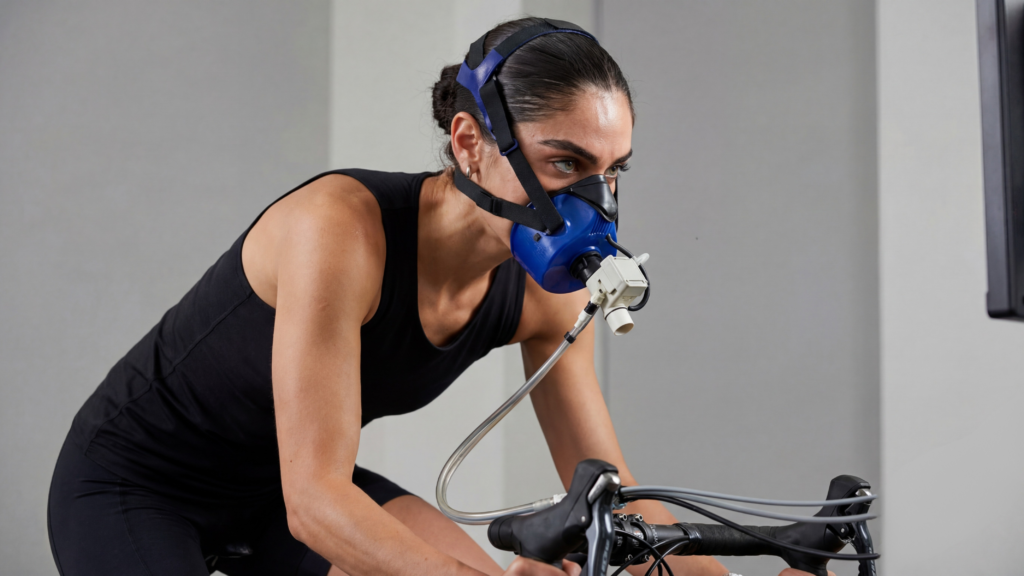
VO2 Max Equipment: Best Machines & Devices to Measure VO2 Max