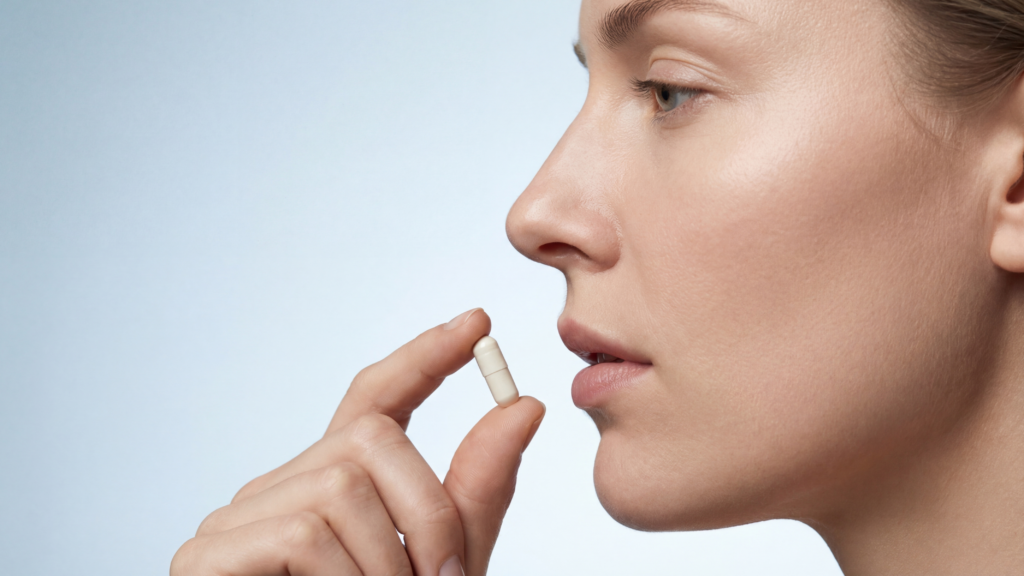
Peptides are having a moment. From longevity clinics to TikTok, injectable therapies targeting sexual desire and performance have moved from niche biohacking circles into mainstream wellness conversations. The promise is seductive: a targeted molecule that boosts arousal, enhances desire, or improves sexual satisfaction — often in under an hour.
But here’s what most of the conversation leaves out: peptides for sexual wellness don’t work in a vacuum. They interact with a metabolic system that may or may not be ready to respond. And most people pursuing peptide therapy have never assessed the metabolic foundation their results depend on.
This isn’t an argument against peptides. It’s an argument for better sequencing — and for understanding what your metabolism is actually doing before you add a new input.
What Are Sexual Wellness Peptides — and How Do They Work?
The most talked-about peptides in the sexual wellness space right now are PT-141 (Bremelanotide), Kisspeptin, and Melanotan II. Each works through a different mechanism, but all share one thing in common: they act on the central nervous system rather than (or in addition to) the vascular system.
PT-141 (Bremelanotide)
PT-141 is a melanocortin receptor agonist that activates receptors in the hypothalamus involved in sexual desire and arousal. Unlike medications such as Viagra or Cialis, which increase blood flow to the genitals, PT-141 targets the brain — stimulating desire at a neurological level.
The FDA approved PT-141 (brand name Vyleesi) in 2019 for the treatment of hypoactive sexual desire disorder (HSDD) in premenopausal women. It is also used off-label in men, particularly those who don’t respond well to PDE5 inhibitors. Clinical trials showed that about one-third of men in the treatment group reported meaningful improvement in erectile function compared to placebo.
PT-141 is administered via subcutaneous injection, typically 45 minutes before sexual activity. Common side effects include nausea, flushing, and headache. Importantly, it is contraindicated in individuals with uncontrolled hypertension or cardiovascular disease — a detail that underscores the relevance of metabolic and cardiovascular assessment before use.
Kisspeptin
Kisspeptin is a naturally occurring hormone that plays a central role in regulating the hypothalamic-pituitary-gonadal (HPG) axis — the signaling chain that controls reproductive hormones.
Recent randomized clinical trials published in JAMA Network Open found that kisspeptin administration significantly enhanced sexual brain processing in both men and women with HSDD. In men, kisspeptin was associated with increased penile tumescence (by up to 56% over placebo) and improved behavioral measures of desire and arousal. In women, kisspeptin modulated brain activity in regions associated with sexual processing and attraction. No side effects were reported in either study.
Kisspeptin is still in the clinical research phase and is not yet commercially available as a therapy — but it is generating significant scientific interest as a potential treatment for low sexual desire in both sexes.
Melanotan II
Melanotan II was originally developed to stimulate skin pigmentation, but it also activates melanocortin receptors that influence sexual arousal. Early research in men showed that it could induce erections, but the compound had notable side effects — including severe nausea and an unpredictably long onset time. PT-141 was subsequently developed as a more refined derivative.
Melanotan II is not FDA-approved for any indication and is primarily available through compounding pharmacies and online retailers. The lack of standardized dosing and quality control makes it a higher-risk option compared to PT-141.
The Metabolic Blind Spot: What Most People Skip
Here’s the pattern: someone experiences declining libido, reduced stamina, or erectile difficulty. They hear about peptides. They order PT-141 from a clinic or compounding pharmacy. They inject.
What they almost never do first is ask: is my metabolism actually functioning well enough for this to work?
This is the metabolic blind spot — and it affects outcomes more than most people realize.
Peptides like PT-141 and kisspeptin work by activating signaling pathways in the brain that initiate desire and arousal. But those signals still depend on the body’s ability to respond: blood vessels need to dilate, hormones need to circulate, mitochondria need to produce energy, and the cardiovascular system needs to deliver oxygen to tissue.
If any of these systems are compromised — by insulin resistance, poor cardiovascular fitness, mitochondrial dysfunction, or excess visceral fat — the downstream effect of peptide therapy is blunted.
Consider:
- Insulin resistance suppresses sex hormone-binding globulin (SHBG), disrupting testosterone and estrogen balance. If hormone signaling is already impaired at a metabolic level, activating desire pathways in the brain may produce limited results.
- Low VO2 Max reflects poor cardiovascular and vascular health. Even if desire increases, reduced blood flow to reproductive organs limits the physical arousal response.
- Poor fat oxidation means the body is inefficient at producing sustained energy. Fatigue, low mood, and energy crashes can counteract the benefits of peptide therapy.
- Mitochondrial dysfunction reduces cellular energy output across the board — affecting not just muscles and organs but also the brain regions where peptides exert their effects.
In short: peptides can send the signal, but your metabolism determines whether the body can answer.
What Breath Testing Reveals That Blood Panels Don’t
Most people who pursue peptide therapy get baseline bloodwork: a hormone panel, metabolic panel, maybe a lipid profile. These are useful, but they leave significant gaps.
Standard labs don’t tell you:
- Your VO2 Max — the single strongest predictor of cardiovascular health and all-cause mortality, directly linked to vascular and sexual function
- Your fat oxidation rate — how efficiently your body accesses and burns fat for energy, which affects stamina, mood, and sustained drive
- Your resting metabolic rate (RMR) — whether your baseline metabolism is running at, above, or below expected levels for your age, sex, and body composition
- Your metabolic flexibility — how well you switch between fuel sources, a key indicator of mitochondrial health and insulin sensitivity
A PNOĒ breath test measures all four of these markers in a single session. The result is a complete picture of your metabolic engine — the system that every peptide, hormone, and medication ultimately depends on.
This isn’t about replacing bloodwork. It’s about completing the picture. A hormone panel tells you what’s circulating. A breath test tells you whether the machinery that uses those hormones is actually working.
Test Before You Treat: The Smarter Sequence
Peptides aren’t bad. For the right person, at the right time, with the right clinical guidance, they can be a meaningful part of a sexual wellness protocol. PT-141 has demonstrated real efficacy. Kisspeptin is showing enormous promise. Even Melanotan II, for all its limitations, pointed the field toward new mechanisms of action.
But the most effective approach isn’t to start with the peptide. It’s to start with data.
Here’s a smarter sequence:
- Assess your metabolic baseline — A PNOĒ breath test reveals your VO2 Max, fat oxidation, RMR, and metabolic flexibility. This tells you whether your body is ready to benefit from any intervention.
- Identify metabolic bottlenecks — Insulin resistance? Low cardiovascular fitness? Poor mitochondrial output? These are fixable — and addressing them can improve sexual health on their own.
- Optimize through exercise and nutrition — Targeted aerobic training, strength work, and nutrition adjustments based on metabolic data can shift the underlying system. Many people find that desire, energy, and performance improve significantly at this stage.
- Layer in clinical interventions if needed — If metabolic optimization alone isn’t enough, peptides, HRT, or other therapies can be added on top of a healthy foundation — where they’ll work better and more predictably.
This is what “test before you treat” looks like. It’s not anti-peptide. It’s pro-data.
Your Metabolism Is the Foundation. Everything Else Builds on It.
The peptide conversation is exciting — and it’s only going to grow. But the smartest people in this space know that no molecule can outperform a broken metabolic foundation.
If you’re considering peptides for sexual wellness, start with the question most people skip: what is my metabolism actually doing?
A single breath test can answer it.
Resources:
- PT-141 (Bremelanotide) — mechanism, clinical overview, uses
https://www.bostonmedicalgroup.com/what-is-pt-141-mechanism-benefits-how-it-works/ - PT-141 clinical data and tower urology overview
https://www.towerurology.com/mens-sexual-health/pt-141-for-men/ - Bremelanotide for female HSDD — PMC review
https://pmc.ncbi.nlm.nih.gov/articles/PMC8788464/ - Bremelanotide (subcutaneous route) — Mayo Clinic
https://www.mayoclinic.org/drugs-supplements/bremelanotide-subcutaneous-route/description/drg-20466805 - Novel emerging therapies for erectile dysfunction — including PT-141 and Melanotan II (World Journal of Men’s Health) https://wjmh.org/DOIx.php?id=10.5534/wjmh.200007
- Kisspeptin and sexual brain processing in men with HSDD — JAMA Network Open RCT (PMC) https://pmc.ncbi.nlm.nih.gov/articles/PMC9898824/
- Kisspeptin and sexual brain processing in women with HSDD — JAMA Network Open RCT (PMC) https://pmc.ncbi.nlm.nih.gov/articles/PMC9606846/
- Kisspeptin hormone injection could treat low sex drive — Imperial College London
https://www.imperial.ac.uk/news/242901/kisspeptin-hormone-injection-could-treat-drive/ - Can kisspeptin be a new treatment for sexual dysfunction? (ScienceDirect) https://www.sciencedirect.com/science/article/abs/pii/S1043276025000475
- Metabolic syndrome and sexual dysfunction — PubMed
https://pubmed.ncbi.nlm.nih.gov/28650864/
Related Posts
Creatine Beyond the Gym: Why It’s Becoming a Longevity Essential

Ashwagandha, Cortisol, and Your Metabolism: What the Science Actually Shows