
Methylene blue has gone from obscure textile dye to one of the most talked-about compounds in longevity circles. Biohackers stain their tongues blue and report sharper focus, more energy, and better mood. The claims all point to one place: the mitochondria. But the question almost no one can answer honestly is the most important one. Does methylene blue work for you, specifically, in a way you can actually verify?
The honest answer is that the mechanism is real and interesting, the human evidence is still preliminary, and the only way to know if it’s helping your metabolism is to measure the systems it claims to affect. Here’s what the science says, and how you’d actually find out.
What Methylene Blue Does at the Cellular Level
Methylene blue’s appeal rests on a genuinely unique mechanism. Inside your cells, mitochondria produce energy by passing electrons down a series of steps called the electron transport chain. When parts of that chain become damaged or inefficient, as happens with aging, stress, and disease, energy production drops.
Methylene blue can act as an alternative electron carrier. It effectively provides a bypass route, shuttling electrons to a later step in the chain (Complex IV, or cytochrome c oxidase) and helping sustain ATP production even when earlier steps are compromised. It also has antioxidant properties, reducing some of the reactive oxygen species that accumulate when mitochondria run inefficiently.
This is why the compound is described as mitochondrial. Its mechanism sits precisely at the machinery that produces cellular energy. As researchers interviewed by NPR explained, lab and animal studies show methylene blue can help cells make energy more efficiently by giving mitochondria an easier way to move electrons when their normal pathways are stressed.
Does Methylene Blue Work in Humans? What the Evidence Shows
Here is where enthusiasm needs to meet evidence. The mechanism is well-characterized in cells and animals, but human data is limited and mostly preliminary.
Small neuroimaging studies have shown promising signals. In one double-blind, placebo-controlled trial, low-dose methylene blue increased cerebral blood flow and produced measurable improvements in memory and attention tasks, with corresponding changes visible on fMRI. Several small trials in select populations have reported cognitive or antidepressant benefits from pure methylene blue.
But these are early findings in small groups, not large-scale confirmation. As University of South Carolina researcher Lorne Hofseth told NPR, the human findings remain preliminary, which is why he discourages people from taking it as a supplement right now, arguing the risks outweigh the benefits. Notably, the most promising clinical work, a modified form of the molecule being studied for Alzheimer’s disease in the UK, uses a different compound than the dye sold online as a supplement.
There’s also a psychological trap worth naming. As University of Maryland pharmacy professor Nicole Brandt pointed out, cognition is subjective. We have good days and bad days depending on sleep, stress, and nutrition. Feeling sharper the week you started methylene blue may have nothing to do with methylene blue. This is the single biggest reason self-assessment fails, and why objective measurement matters.
The Safety Reality
Before considering whether methylene blue works, it’s worth understanding the risks, because they’re significant. Methylene blue is a monoamine oxidase inhibitor, which means it can cause serotonin toxicity when combined with common antidepressants such as SSRIs and SNRIs. This is a serious, potentially fatal reaction, and it’s the basis of an FDA warning. People with G6PD deficiency, a genetic red-blood-cell disorder, can experience severe complications. And because most methylene blue sold online is not regulated as a supplement, product purity is a real concern.
Anyone considering it should talk to a clinician first, screen for drug interactions and contraindications, and use only pharmaceutical-grade product if cleared to proceed.
How to Actually Measure If Methylene Blue Is Working
Here’s the core problem: if methylene blue’s entire value proposition is improved mitochondrial function, then “I feel more energetic” is not proof. It’s a subjective impression that could come from a dozen other sources. To know whether the compound is doing what it claims, you need to measure the systems it targets.
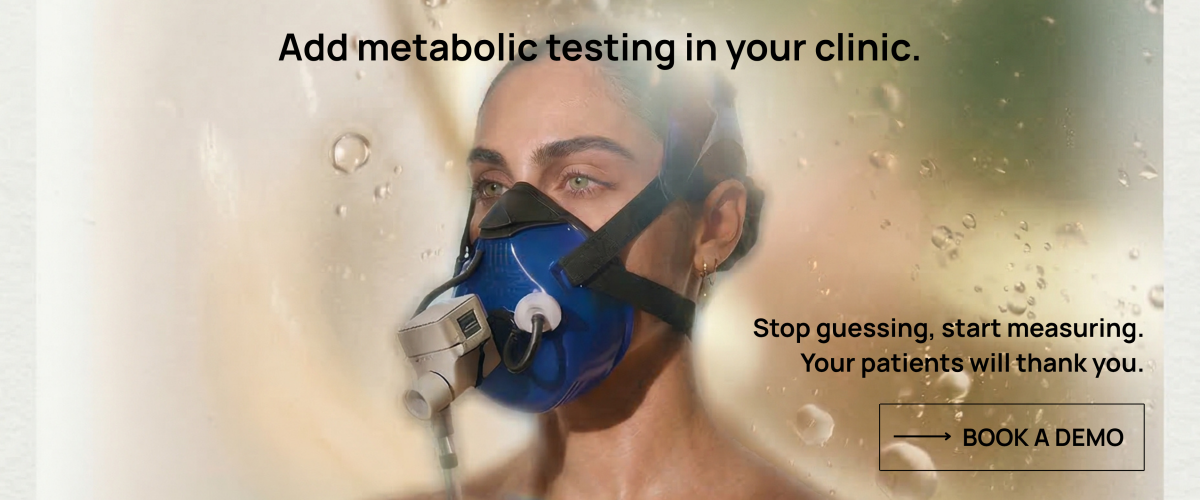
That’s exactly what breath analysis does. A PNOĒ metabolic test measures the functional output of your mitochondria directly:
- Fat oxidation rate shows how efficiently your cells burn fat for fuel. Better mitochondrial function should improve fat oxidation, making it one of the most sensitive markers of real metabolic change.
- Respiratory exchange ratio (RER) reflects the balance between fat and carbohydrate use. A resting RER that shifts toward fat reliance is a direct signal of improved mitochondrial efficiency.
- Resting metabolic rate (RMR) reflects baseline energy production. A meaningful change indicates your cellular energy systems are genuinely responding.
- Metabolic flexibility measures how well you switch between fuel sources, a proxy for mitochondrial and metabolic health.
The approach is simple: measure your baseline before starting, then retest after 8 to 12 weeks. If your fat oxidation improves, your RER shifts, and your metabolic flexibility increases, you have objective evidence the compound is affecting your metabolism. If nothing moves, you’ve saved yourself money and risk, and learned something no subjective impression could tell you.
The Bottom Line
Does methylene blue work? The mechanism is real and sits exactly where it matters, at the mitochondria. But the human evidence is preliminary, the safety profile demands caution, and the subjective “I feel sharper” that drives most enthusiasm is unreliable by nature. The only way to answer the question for yourself is to measure the metabolic systems methylene blue claims to improve, before and after.
Promising mechanism, unproven individual benefit. That gap is exactly what breath testing closes.
References
- Boden S. “What’s behind the wellness claims for the synthetic dye methylene blue?” NPR. December 15, 2025. https://www.npr.org/2025/12/15/nx-s1-5634680/methylene-blue-supplement-safety
- Ostrovsky A, Afzal M. “Methylene Blue.” StatPearls [Internet]. NCBI Bookshelf. Updated January 2026. https://www.ncbi.nlm.nih.gov/books/NBK557593/
- Rodriguez P, Zhou W, Barrett DW, et al. “Multimodal Randomized Functional MR Imaging of the Effects of Methylene Blue in the Human Brain.” Radiology. 2016;281(2):516-526. https://pubmed.ncbi.nlm.nih.gov/27351678/
- Auchter A, Williams J, Barksdale B, Monfils MH, Gonzalez-Lima F. “Therapeutic benefits of methylene blue on cognitive impairment during chronic cerebral hypoperfusion.” Journal of Alzheimer’s Disease. 2014. https://pubmed.ncbi.nlm.nih.gov/24577463/
- Tucker D, Lu Y, Zhang Q. “From Mitochondrial Function to Neuroprotection – an Emerging Role for Methylene Blue.” Molecular Neurobiology. 2018;55(6):5137-5153. https://pubmed.ncbi.nlm.nih.gov/28840449/
- Tsekouras YE, Tambalis KD, Sarras SE, et al. “Validity and Reliability of the New Portable Metabolic Analyzer PNOE.” Frontiers in Sports and Active Living. 2019;1:24. https://www.frontiersin.org/articles/10.3389/fspor.2019.00024/full
Related Posts

CGM vs Metabolic Testing: What’s the Difference?

Insulin Resistance Testing & Breath Analysis

Mitochondrial Health: The Foundation of Energy and Longevity