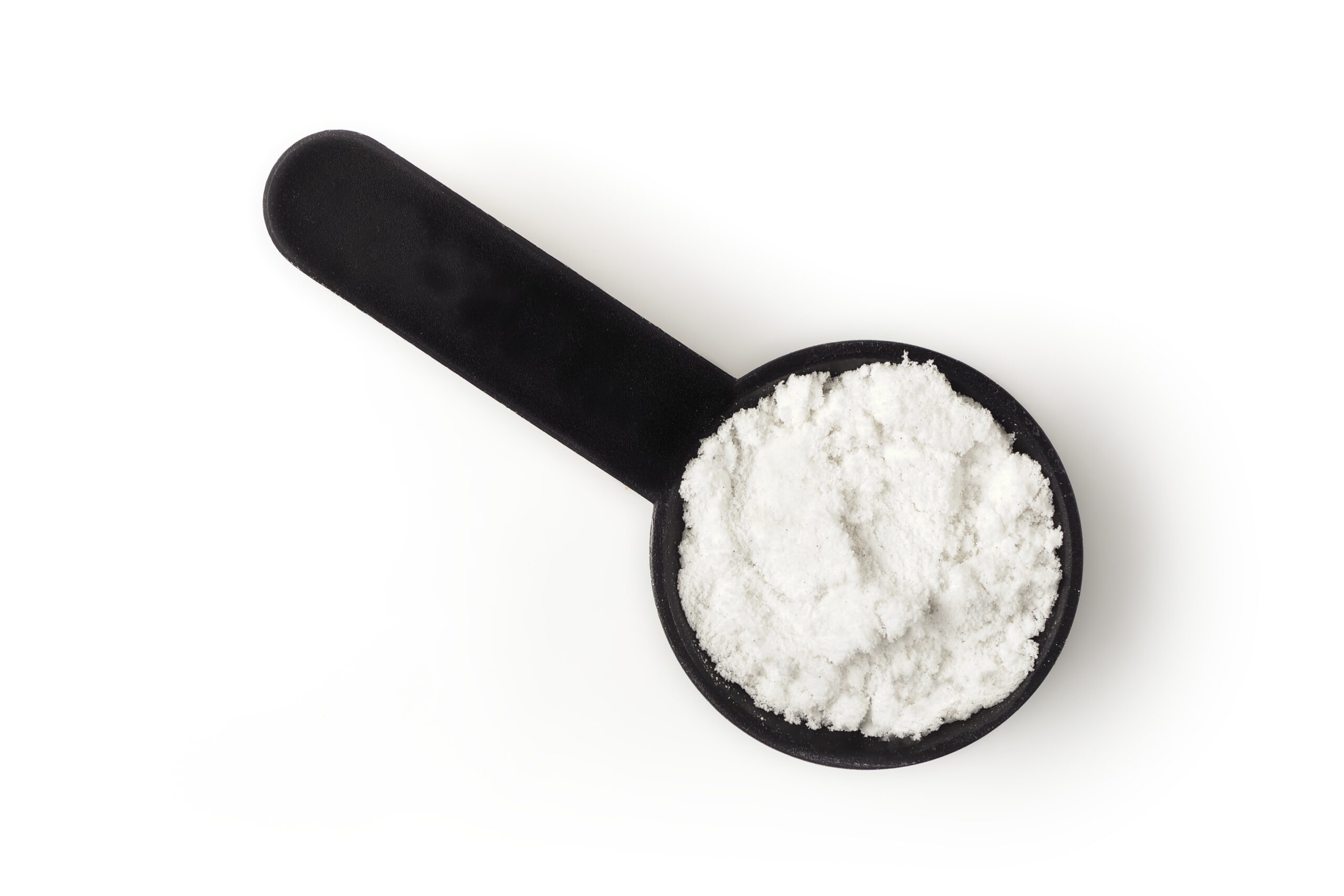
If you still think creatine is just a bodybuilding supplement, you’re about a decade behind the science. What was once synonymous with gym culture and protein shakes has quietly become one of the most well-studied compounds in the longevity space — with peer-reviewed evidence supporting its role in muscle preservation, brain health, bone density, and cellular energy production as we age.
And for anyone tracking their metabolic health — especially those on GLP-1 medications or concerned about age-related muscle loss — creatine for longevity and metabolic health may be one of the most practical, affordable interventions available.
What Creatine Actually Does
Creatine is a naturally occurring compound found primarily in red meat, seafood, and poultry. About 95% of the body’s creatine is stored in skeletal muscle, with smaller amounts in the brain and testes. Its primary function is energy metabolism: creatine combines with phosphate to form phosphocreatine (PCr), which enables the rapid regeneration of ATP — the fundamental energy currency of every cell in your body.
This isn’t just relevant during a heavy squat. ATP powers everything: muscle contraction, neural signaling, heart function, and brain activity. The brain alone accounts for roughly 20% of the body’s total energy expenditure at rest, making it one of the most creatine-dependent organs in the body.
Here’s the problem: creatine levels naturally decline with age. A 2025 study examining NHANES data found that both endogenous creatine synthesis and dietary intake decrease significantly in older adults, particularly those over 65. This creates a widening gap between what the body needs and what it produces — contributing to the muscle loss, cognitive decline, and reduced metabolic rate that characterize aging.
Muscle Preservation: The Strongest Evidence
The most robust data for creatine supplementation in aging populations centers on muscle health. Multiple meta-analyses and randomized controlled trials have demonstrated that creatine, particularly when combined with resistance training, increases lean body mass, improves muscle strength (both upper and lower body), and enhances functional capacity in older adults.
A 2025 narrative review published in Frontiers in Nutrition examined the effects of creatine combined with exercise on physical and cognitive outcomes in aging populations. The authors found that creatine supplementation enhances lower-limb power and rate of force development — critical for mobility, balance, and fall prevention. The review highlighted the concept of “powerpenia” (age-related loss of muscle power), which often precedes and has a greater impact on daily function than loss of strength alone.
A comprehensive 2025 review in the Journal of the International Society of Sports Nutrition went further, concluding that creatine monohydrate at 3 grams or more per day, combined with resistance training, is a “viable intervention for improving strength, whole-body lean mass, regional muscle size and density, and select measures of functional ability in older adults.”
This evidence is particularly relevant for GLP-1 users. Research shows that up to 40% of weight lost on high-efficacy GLP-1 drugs can be lean mass rather than fat. Creatine supplementation alongside resistance training may help mitigate this muscle loss — protecting resting metabolic rate and long-term functional health during pharmacological weight loss.
Brain Health: The Emerging Frontier
Creatine crosses the blood-brain barrier, and emerging research suggests it may play a neuroprotective role in aging. In animal models, creatine supplementation reduced reactive oxygen species in the brain, decreased lipofuscin (an “aging pigment”), and upregulated genes associated with neuronal growth and learning.
A 2025 systematic review published in Nutrition Reviews examined creatine and cognition specifically in older adults (55+). Of six included studies, five (83.3%) reported a positive relationship between creatine and cognitive function — particularly in the domains of memory and attention. A separate pilot study in Alzheimer’s patients using 20 grams daily showed an 11% increase in brain creatine levels.
The authors noted that while the evidence is promising, high-quality clinical trials are still needed to confirm these effects. Creatine’s cognitive benefits should be considered a strong hypothesis rather than established clinical practice — but the mechanistic rationale is compelling: the brain needs constant ATP, creatine supports ATP regeneration, and creatine levels decline with age.
Bone Health and Fall Prevention
Beyond muscle and brain, creatine shows potential for bone health. Several studies have found that creatine supplementation may enhance bone mineral density, particularly when paired with resistance training. It appears to influence the activation of cells involved in both bone formation and resorption.
Perhaps more practically, creatine’s effects on muscle strength, power, and neural function collectively reduce the risk of falls — one of the leading causes of injury, disability, and loss of independence in older adults.
Safety: One of the Most Studied Supplements in Existence
Creatine monohydrate has been extensively studied for safety across diverse populations. Research in older adults — including those with type 2 diabetes, Parkinson’s disease, and other age-related conditions — has consistently found no adverse effects on kidney function, liver health, or other markers of organ safety.
Common myths about creatine causing dehydration, hair loss, or kidney damage have been addressed and refuted in peer-reviewed literature. At standard dosages (3–5 grams per day), creatine monohydrate is considered one of the safest and most well-tolerated supplements available.
The PNOĒ Connection: Measuring What Creatine Protects
Creatine’s primary benefits — muscle preservation, metabolic rate maintenance, and cellular energy production — are the same markers that a PNOĒ breath test measures directly.
Resting metabolic rate (RMR) reflects how much energy your body burns at rest. Muscle is the primary driver of RMR. If creatine (combined with training) is preserving your lean mass, your RMR should remain stable or improve over time — and breath testing shows this in real numbers.
Fat oxidation rate indicates how efficiently your cells access fat for fuel. Improved cellular energy metabolism — the mechanism creatine supports — should be reflected in better fat oxidation efficiency.
VO2 Max captures cardiovascular and mitochondrial fitness. While creatine doesn’t directly improve VO2 Max, preserving muscle mass and training capacity contributes to maintaining the cardiovascular system that VO2 Max measures.
Without metabolic testing, you’re guessing whether creatine is actually moving the needle. With it, you have proof.
The Bottom Line
Creatine is no longer just a gym supplement. It’s a well-studied, safe, and affordable compound with growing evidence for preserving muscle, supporting brain health, and protecting metabolic function as we age. At 3–5 grams per day, it may be one of the highest-value longevity interventions available — especially for those on GLP-1 medications or experiencing age-related muscle and metabolic decline.
But like any supplement, it works best when paired with resistance training, adequate protein intake, and metabolic data that tells you whether it’s actually working.
SOURCES
- Frontiers in Nutrition — “Creatine supplementation and exercise in aging: a narrative review of the muscle–brain axis” (2025): https://www.frontiersin.org/journals/nutrition/articles/10.3389/fnut.2025.1687719/full
- Journal of the International Society of Sports Nutrition — “Creatine monohydrate supplementation for older adults and clinical populations” (2025): https://pmc.ncbi.nlm.nih.gov/articles/PMC12272710/
- Journal of the International Society of Sports Nutrition — “Creatine supplementation as an adjunct to improving healthy aging” (2025/2026): https://www.tandfonline.com/doi/full/10.1080/30653495.2025.2565997
- Nutrition Reviews — “Creatine and Cognition in Aging: A Systematic Review of Evidence in Older Adults” (2025): https://academic.oup.com/nutritionreviews/advance-article/doi/10.1093/nutrit/nuaf135/8253584
- PMC — “Effectiveness of Creatine Supplementation on Aging Muscle and Bone: Focus on Falls Prevention and Inflammation”: https://pmc.ncbi.nlm.nih.gov/articles/PMC6518405/
- Jinfiniti — “How Creatine Became an Anti-Aging and Longevity Essential” (2025): https://www.jinfiniti.com/creatine-longevity/
- Harvard Science Review — “The GLP-1 Aftermath: What the Science Says About Muscle Loss and Cellular Aging” (2026): https://harvardsciencereview.org/2026/02/23/the-glp-1-aftermath-what-the-science-says-about-muscle-loss-and-cellular-aging/
Related Posts
Ashwagandha, Cortisol, and Your Metabolism: What the Science Actually Shows
Are Peptides the New Supplements? Why Metabolic Data Should Come First