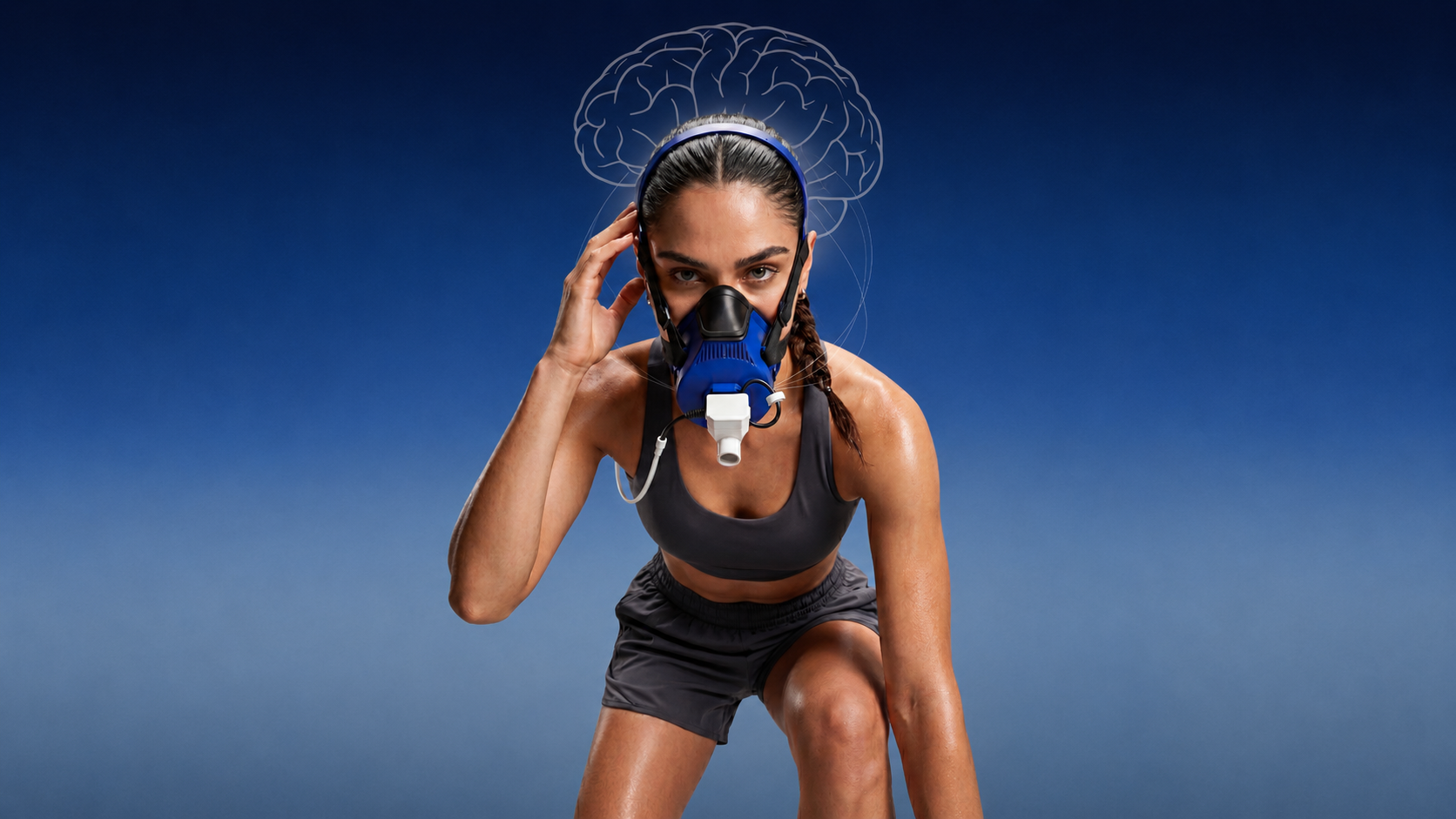
For decades, VO2 Max was viewed as an athletic metric, relevant to runners, cyclists, and endurance athletes chasing performance. That view is now being rewritten by neuroscience. A growing body of research shows that the link between VO2 Max and brain health may be one of the most important relationships in preventive medicine.
The reason is simple: your brain runs on oxygen. It makes up roughly 2% of your body weight but consumes around 20% of your oxygen at rest. Every thought, memory, and decision depends on a constant, well-regulated supply of oxygen and energy delivered by your cardiovascular and mitochondrial systems. VO2 Max measures exactly how well those systems perform.
The Evidence: Fitness and Dementia Risk
The most compelling case for VO2 Max and brain health comes from large-scale population data. A 2026 systematic review and meta-analysis published in Nature Mental Health analyzed 27 cohort studies covering more than 4 million people across 9 countries. The findings were striking: individuals with high cardiorespiratory fitness had a 39% lower risk of all-cause dementia and a 36% lower risk of depression compared to those with low fitness.
The relationship was dose-dependent, meaning the fitter someone was, the lower their risk, with no observed ceiling effect. Each 1-MET increase in fitness was associated with a 19% reduction in dementia risk. To put that in perspective, improving from the lowest to the highest fitness category could theoretically delay dementia onset by years, a magnitude of protection that exceeds any pharmaceutical intervention currently available for prevention.
This isn’t an isolated finding. Multiple large cohort studies have reported that high-fitness individuals show substantially lower risk of cognitive decline, and longitudinal research consistently links midlife cardiorespiratory fitness to better brain health decades later.
Why VO2 Max Protects the Brain: The Mechanisms
Correlation is compelling, but the mechanisms explain why the relationship is causal and biological, not coincidental.
Cerebral Blood Flow
Higher VO2 Max is associated with healthier blood vessels and better cerebral perfusion. Studies using MRI and Doppler ultrasound have found that fitter adults maintain higher and more efficient blood flow to brain regions most vulnerable to aging. Because the brain depends on continuous oxygen delivery, maintaining robust cerebral blood flow is one of the most direct ways fitness protects cognition. Alzheimer’s and vascular dementia are increasingly understood as neurovascular disorders, conditions rooted in impaired blood flow, which is precisely what cardiorespiratory fitness helps preserve.
Hippocampal Volume and Neuroplasticity
The hippocampus, the brain’s memory center, shrinks with age and is one of the earliest structures affected in Alzheimer’s disease. Aerobic fitness can slow and in some cases reverse this trend. In a landmark study, older adults who increased their aerobic fitness also increased hippocampal volume by roughly 2%, effectively reversing one to two years of age-related loss. Research has also linked higher VO2 Max to greater grey matter volume in the hippocampus, prefrontal cortex, and other regions critical for memory and executive function.
Mitochondrial and Vascular Health
VO2 Max reflects the integrated capacity of your lungs, heart, blood vessels, and mitochondria to deliver and use oxygen. Higher fitness is associated with reduced systemic inflammation, lower oxidative stress, and greater cerebral myelination, all of which protect neurons from the slow, compounding damage that drives cognitive decline. In short, the same systems that determine your VO2 Max are the systems that keep your brain fueled.
VO2 Max as an Early Brain Health Marker
One of the most important findings in recent research is that baseline VO2 Max can predict long-term brain health better than the type of exercise program someone follows later. A 2026 analysis found that across participants, baseline cardiorespiratory fitness was a stronger predictor of long-term brain health than whether someone was later assigned to high-intensity, moderate, or general activity programs.
This reframes VO2 Max as more than a fitness score. It is an early, measurable indicator of brain resilience, one that reflects decades of cardiovascular and metabolic health and forecasts how the brain may respond to aging.
How Breath Testing Measures Your Brain-Protective Fitness
You cannot improve what you don’t measure. While wearables estimate VO2 Max with significant error, a clinical-grade breath test measures it directly, alongside the other metabolic markers that influence brain health.
A PNOE breath test measures:
- VO2 Max, the integrated capacity of your oxygen delivery system and the strongest fitness-based predictor of dementia risk
- Resting metabolic rate, reflecting baseline mitochondrial output and the cellular energy your brain depends on
- Fat oxidation rate, indicating how efficiently your cells produce steady energy versus relying on glucose
- Metabolic flexibility, a marker of insulin sensitivity, which is directly tied to brain glucose metabolism and cognitive function
- Ventilatory thresholds, defining the precise training zones needed to build VO2 Max safely and effectively
With this data, improving your brain-protective fitness becomes a targeted, measurable process rather than guesswork.
How to Build VO2 Max for Brain Health
The research points to clear, actionable strategies:
Zone 2 base training. Sustained aerobic work at a conversational pace builds mitochondrial density and cerebral perfusion. A breath test identifies your exact Zone 2 heart rate so you train in the right range.
VO2 Max intervals. Higher-intensity intervals (such as 4-minute efforts at near-maximal effort) are among the most effective ways to raise VO2 Max, and research suggests interval training has a slight edge over steady-state training for fitness gains.
Consistency over intensity. The dementia-risk data shows that even modest, sustained fitness improvements matter. You don’t need elite fitness, you need a measurable upward trend over time.
Retest every 3 to 6 months. Tracking your VO2 Max confirms whether your training is actually building the cardiovascular capacity that protects your brain.
The Bottom Line
The connection between VO2 Max and brain health is one of the clearest, most actionable findings in longevity science. Higher cardiorespiratory fitness is linked to dramatically lower risk of dementia and depression, through mechanisms involving cerebral blood flow, hippocampal preservation, and reduced inflammation. And unlike genetics, VO2 Max is modifiable, you can measure it, train it, and track it.
Your brain depends on how well your body delivers oxygen. Measuring your VO2 Max is the first step to protecting your mind.
References
- Diaz-Goni V, Lopez-Gil JF, Bizzozero-Peroni B, et al. “Cardiorespiratory fitness and risk of mental disorders and dementia: a systematic review and meta-analysis.” Nature Mental Health. 2026. https://www.nature.com/articles/s44220-026-00599-4
- Olivo G, Nilsson J, Garzon B, et al. “Higher VO2max is associated with thicker cortex and lower grey matter blood flow in older adults.” Scientific Reports. 2021;11:16722. https://www.nature.com/articles/s41598-021-96138-5
- Erickson KI, Voss MW, Prakash RS, et al. “Exercise training increases size of hippocampus and improves memory.” Proceedings of the National Academy of Sciences. 2011;108(7):3017-3022. https://www.pnas.org/doi/10.1073/pnas.1015950108
- “Physical Activity to Counter Age-Related Cognitive Decline: Benefits of Aerobic, Resistance, and Combined Training – A Narrative Review.” Sports Medicine – Open. 2025;11:50. https://link.springer.com/article/10.1186/s40798-025-00857-2
- Ross R, Blair SN, Arena R, et al. “Importance of Assessing Cardiorespiratory Fitness in Clinical Practice: A Case for Fitness as a Clinical Vital Sign.” Circulation. 2016;134(24):e653-e699. https://www.ahajournals.org/doi/full/10.1161/CIR.0000000000000461
- Tsekouras YE, Tambalis KD, Sarras SE, et al. “Validity and Reliability of the New Portable Metabolic Analyzer PNOE.” Frontiers in Sports and Active Living. 2019;1:24. https://www.frontiersin.org/articles/10.3389/fspor.2019.00024/full
Related Posts

Repeated Sprint Ability: Why Soccer Is Really an Aerobic Sport

Soccer Player VO2 Max: How World Cup Athletes Compare to You
Brain Fog and Metabolism: What Your Breath Reveals About Focus