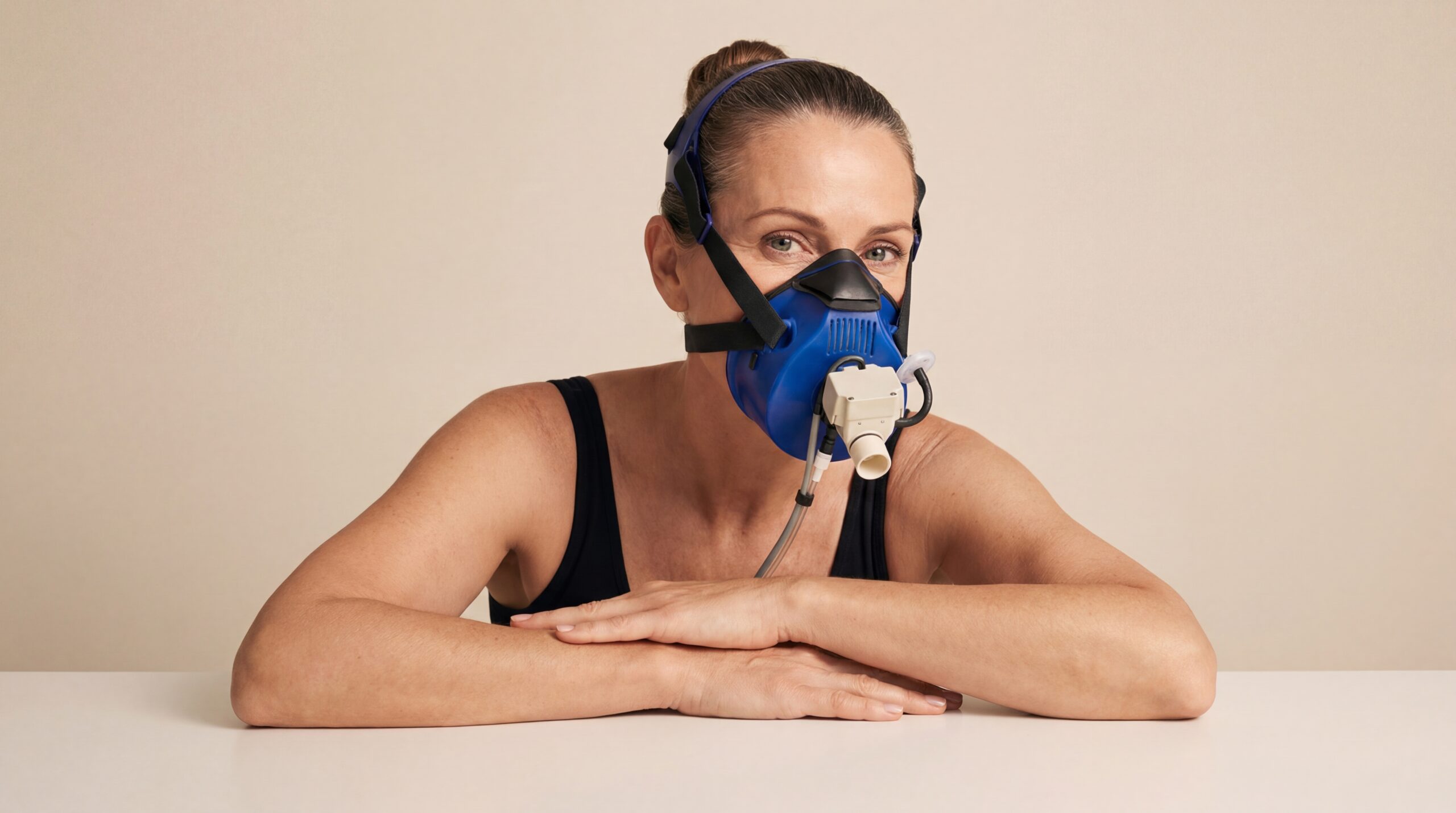
Your VO2 max score only becomes meaningful when you compare it to the right benchmark. A VO2 max of 38 mL/kg/min means something very different for a 25-year-old man than for a 55-year-old woman. Without age- and sex-adjusted VO2 max norms, you are interpreting your fitness in a vacuum.
This guide provides comprehensive VO2 max norms charts for men and women across every decade of adult life, explains why VO2 max scores differ between groups, and shows you how to use your VO2 max number to set training goals that actually matter for your health and longevity.
VO2 Max Norms for Men: Complete Chart by Age
The table below shows normative VO2 max ranges for adult males based on published exercise physiology data and ACSM guidelines. All VO2 max values are expressed in mL/kg/min.
| Age | Very Poor | Poor | Fair | Good | Excellent | Superior |
| 20–29 | <25 | 25–33 | 34–37 | 38–42 | 43–52 | 53+ |
| 30–39 | <23 | 23–31 | 32–35 | 36–40 | 41–49 | 50+ |
| 40–49 | <20 | 20–28 | 29–33 | 34–38 | 39–47 | 48+ |
| 50–59 | <18 | 18–25 | 26–31 | 32–37 | 38–45 | 46+ |
| 60–69 | <16 | 16–22 | 23–28 | 29–34 | 35–41 | 42+ |
| 70–79 | <14 | 14–19 | 20–24 | 25–30 | 31–37 | 38+ |
What These VO2 Max Norms Mean in Practice
A 40-year-old male with a VO2 max of 35 mL/kg/min falls into the “Good” category on the VO2 max norms chart. He has above-average cardiovascular fitness for his age, but still has meaningful room for improvement. Moving into the “Excellent” VO2 max range — which for his demographic starts around 39 mL/kg/min — would correspond to a measurable reduction in cardiovascular disease risk and a noticeable improvement in daily energy and exercise capacity.
A 40-year-old male in the “Very Poor” VO2 max category (below 20 mL/kg/min) faces significantly elevated risk for metabolic syndrome, cardiovascular events, and premature mortality. The good news: this is also the group with the most to gain. Research shows that moving from the bottom VO2 max quintile to even the next level up delivers the largest relative reduction in all-cause mortality — bigger than any pharmaceutical intervention.
VO2 Max Norms for Specific Male Age Groups
VO2 max norms for a 30-year-old male: The average VO2 max for men aged 30–39 is approximately 34–36 mL/kg/min. A “Good” VO2 max starts around 36, and an “Excellent” VO2 max begins near 41. With consistent training combining Zone 2 base work and HIIT, a VO2 max of 42–48 is a realistic target for this age group.
VO2 max norms for a 40-year-old male: The average VO2 max drops to roughly 31–34 mL/kg/min. According to the VO2 max norms chart, maintaining a VO2 max above 34 places you in the “Good” category, and above 39 is “Excellent.” If you are training 3–4 times per week with a mix of moderate and high-intensity aerobic work, a VO2 max score in the 38–45 range is both realistic and health-protective.
VO2 max norms for a 50-year-old male: Average VO2 max falls to approximately 29–33 mL/kg/min. Maintaining a VO2 max above 35 places you ahead of the vast majority of your peers and is strongly associated with reduced chronic disease risk. A VO2 max above 40 at age 50 reflects the cardiovascular fitness of an average man 15–20 years younger — your biological age is significantly below your calendar age.
VO2 max norms for a 60-year-old male: Average VO2 max values drop to approximately 26–30 mL/kg/min. A VO2 max of 35 or above at 60 is considered excellent according to the VO2 max norms tables. This is the demographic where VO2 max improvements have the most dramatic impact on quality of life — the difference between climbing stairs easily and struggling with daily activities.
VO2 Max Norms for Women: Complete Chart by Age
Women’s VO2 max norms follow the same age-related decline pattern but start from a lower baseline due to physiological differences (explained below). All VO2 max values are in mL/kg/min.
| Age | Very Poor | Poor | Fair | Good | Excellent | Superior |
| 20–29 | <24 | 24–28 | 29–32 | 33–37 | 38–46 | 47+ |
| 30–39 | <22 | 22–26 | 27–30 | 31–35 | 36–44 | 45+ |
| 40–49 | <19 | 19–24 | 25–28 | 29–33 | 34–41 | 42+ |
| 50–59 | <17 | 17–21 | 22–26 | 27–32 | 33–39 | 40+ |
| 60–69 | <15 | 15–19 | 20–24 | 25–30 | 31–37 | 38+ |
| 70–79 | <13 | 13–17 | 18–22 | 23–27 | 28–34 | 35+ |
VO2 Max Norms for Specific Female Age Groups
VO2 max norms for women aged 30–39: The average VO2 max for women in this age group sits around 28–31 mL/kg/min. A “Good” VO2 max starts at 31, and an “Excellent” VO2 max score is 36 or above. Women in this age group who combine regular strength training with aerobic work often see disproportionate VO2 max improvements because increased lean muscle mass improves both oxygen utilization and the body-weight denominator of the VO2 max equation.
VO2 max norms for a 40-year-old female: Average VO2 max for women in their 40s is approximately 26–29 mL/kg/min. A VO2 max above 29 is “Good” and above 34 is “Excellent” on the VO2 max norms chart. This is a critical decade for women’s cardiovascular health, as perimenopause begins to accelerate metabolic and hormonal changes.
VO2 max norms for a 50-year-old female: Average VO2 max drops to roughly 24–27 mL/kg/min. Maintaining a VO2 max above 30 at this age places you well above average. Menopause-related hormonal shifts — particularly declining estrogen — can accelerate VO2 max decline in women, making regular testing and targeted training even more important.
VO2 max norms for women over 60: Average VO2 max falls to approximately 22–26 mL/kg/min. Cardiovascular disease is the leading cause of death in women over 60, and VO2 max is a stronger predictor of cardiovascular mortality than traditional risk factors like cholesterol or blood pressure. A “Good” or “Excellent” VO2 max score at this age translates directly to functional independence.
Why Do Women’s VO2 Max Norms Differ From Men’s?
The gap between male and female VO2 max norms — typically 15–25% — is driven by several physiological factors. None of these diminish the importance of a high VO2 max for women’s health:
Hemoglobin concentration. Women have approximately 12–16% lower hemoglobin levels than men, meaning less oxygen-carrying capacity per unit of blood. This directly limits how much oxygen reaches working muscles, lowering VO2 max.
Heart size and stroke volume. Women’s hearts are, on average, smaller, resulting in lower stroke volume. A smaller heart must beat faster to deliver the same cardiac output, which is less efficient at maximal intensities — capping VO2 max below what a larger heart could achieve.
Body composition. Women carry a higher percentage of essential body fat (approximately 10–13% vs. 2–5% in men). Since VO2 max is expressed relative to total body weight, the higher proportion of metabolically inactive tissue lowers the VO2 max score.
Muscle fiber distribution and mass. Women have, on average, less total skeletal muscle mass, which influences both oxygen extraction and mechanical efficiency during VO2 max testing.
These differences are precisely why sex-specific VO2 max norms exist. Comparing a woman’s VO2 max directly to male VO2 max norms is misleading and clinically useless. A woman scoring “Excellent” on the female VO2 max norms chart enjoys the same relative health and performance advantages as a man scoring “Excellent” on the male chart.
How VO2 Max Norms Change With Age: Understanding the Decline
VO2 max declines at a relatively predictable rate across the lifespan, but the speed of that decline is heavily influenced by physical activity level:
Sedentary adults lose approximately 8–10% of their VO2 max per decade after age 30. By age 60, a sedentary person’s VO2 max may have dropped 25–30% from its peak — the equivalent of aging their cardiovascular system 20+ years beyond their calendar age. On the VO2 max norms chart, they rapidly shift from “Average” to “Poor” categories without necessarily realizing it.
Regularly active adults experience a slower VO2 max decline of approximately 5–7% per decade. Consistent aerobic training preserves mitochondrial density, cardiac stroke volume, and vascular elasticity — all of which support VO2 max maintenance.
Highly trained individuals can limit their VO2 max decline to as little as 3–5% per decade. Masters athletes in their 60s and 70s frequently maintain VO2 max values that match or exceed the average VO2 max norms for sedentary individuals 20–30 years younger.
The practical takeaway: age-related VO2 max decline is not a fixed fate. It is a modifiable trajectory. The decisions you make in your 30s, 40s, and 50s determine whether you arrive at your 70s with the cardiovascular capacity to live independently or not.
What Your VO2 Max Score Tells You (And Where VO2 Max Norms Fall Short)
What VO2 max norms tell you
- Your overall cardiorespiratory fitness relative to your age and sex
- Your biological cardiovascular age compared to population averages
- Your risk profile for cardiovascular disease, metabolic syndrome, and all-cause mortality
- Whether your training program is producing measurable VO2 max improvement (when tested over time)
What VO2 max norms alone cannot tell you
- Why your VO2 max score is what it is. Is your lung ventilatory efficiency the limiting factor? Is your heart undersized for the demand? Are your mitochondria underperforming? A raw VO2 max number and a norms chart cannot answer these questions.
- Your resting metabolic rate (RMR) or fat-burning efficiency
- Your sport-specific performance potential beyond VO2 max
- Exactly how to train to improve your specific VO2 max limiter
This is the critical gap that comprehensive metabolic testing fills. A PNOĒ breath analysis delivers your VO2 max alongside 22 additional biomarkers that reveal exactly where in the oxygen chain your body is falling short — and what to do about it. Instead of knowing that your VO2 max is “Fair” for your age, you know precisely why and how to move it into the “Excellent” range.
How to Move Up on the VO2 Max Norms Chart: Next Steps
Regardless of where you currently fall on the VO2 max norms tables, improvement is possible at every age and starting point. The most effective path combines three elements:
- Baseline VO2 max testing. Get your VO2 max measured accurately with a validated device — not estimated by a wearable. A PNOĒ VO2 max test gives you your true score plus the metabolic context to act on it.
- Targeted training based on your VO2 max data. Use your test results to identify your limiter and build a training plan that addresses it specifically. A personalized plan built from your actual VO2 max and metabolic data outperforms a generic program.
- Serial VO2 max re-testing. Re-test every 8–12 weeks to track VO2 max adaptation, catch plateaus early, and adjust your approach. Your VO2 max norms category should be moving in the right direction — if it is not, the data tells you why.
References
- Garber CE, Blissmer B, Deschenes MR, et al. “Quantity and Quality of Exercise for Developing and Maintaining Cardiorespiratory, Musculoskeletal, and Neuromotor Fitness in Apparently Healthy Adults.” Medicine & Science in Sports & Exercise. 2011;43(7):1334–1359. (ACSM Guidelines — basis for normative VO2 max classification tables)
- Mandsager K, Harb S, Cremer P, et al. “Association of Cardiorespiratory Fitness With Long-term Mortality Among Adults Undergoing Exercise Treadmill Testing.” JAMA Network Open. 2018;1(6):e183605. https://jamanetwork.com/journals/jamanetworkopen/fullarticle/2707428
- Ross R, Blair SN, Arena R, et al. “Importance of Assessing Cardiorespiratory Fitness in Clinical Practice: A Case for Fitness as a Clinical Vital Sign.” Circulation. 2016;134(24):e653–e699. https://www.ahajournals.org/doi/full/10.1161/CIR.0000000000000461
- Kodama S, Saito K, Tanaka S, et al. “Cardiorespiratory Fitness as a Quantitative Predictor of All-Cause Mortality and Cardiovascular Events in Healthy Men and Women: A Meta-analysis.” JAMA. 2009;301(19):2024–2035. https://jamanetwork.com/journals/jama/fullarticle/1108396
- Fleg JL, Morrell CH, Bos AG, et al. “Accelerated Longitudinal Decline of Aerobic Capacity in Healthy Older Adults.” Circulation. 2005;112(5):674–682.
- Pate RR, Kriska A. “Physiological Basis of the Sex Difference in Cardiorespiratory Endurance.” Sports Medicine. 1984;1(2):87–98.
- Aspenes ST, Nilsen TIL, Skaug EA, et al. “Peak Oxygen Uptake and Cardiovascular Risk Factors in 4631 Healthy Women and Men.” Medicine & Science in Sports & Exercise. 2011;43(8):1465–1473.
Related Posts

Repeated Sprint Ability: Why Soccer Is Really an Aerobic Sport

Soccer Player VO2 Max: How World Cup Athletes Compare to You