
Many people today eat well, train consistently, supplement responsibly, and still feel stuck – low energy, slow recovery, stubborn body composition changes, or declining performance. This disconnect often leads to more supplements, more training, or stricter routines.
But the issue is rarely effort. It’s usually a lack of visibility.
Health, performance, and longevity depend on how your body responds to what you do, not simply what you consume or how hard you work. Approached from different angles, Momentous and PNOĒ both focus on supporting human performance as a system, not a shortcut.
Who Is Momentous and What Do They Actually Stand For?
Momentous is not positioned as a trend-driven supplement brand. Their materials consistently emphasize one central idea: Performance for Life.
That philosophy shows up in several key principles repeated across their education and product frameworks:
- Foundations come before optimization
- Consistency beats complexity
- Nutrition should support systems, not chase symptoms
- Long-term resilience matters more than short-term performance spikes
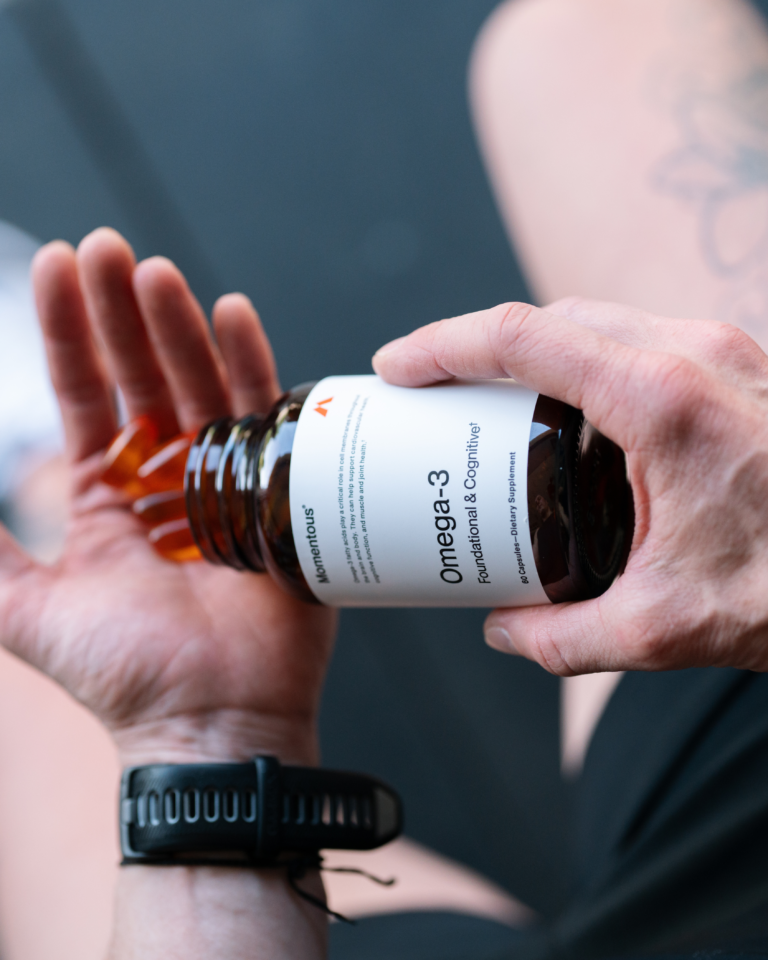
Instead of pushing dozens of supplements, Momentous organizes nutrition into clear, tiered frameworks, starting with fundamentals like protein, creatine, and omega-3s, then progressing toward recovery, cognitive support, and longevity-focused nutrients.
Their approach reflects a belief that:
If the foundations are weak, no amount of optimization will hold.
Momentous also emphasizes transparency, third-party testing, and science-backed formulations, not as marketing buzzwords, but as prerequisites for trust.


Where Nutrition Alone Hits a Wall
Even with high-quality nutrition and supplementation, one challenge remains:
How do you know if it’s actually working for your body?
Two people can follow the same protocol and experience very different outcomes. Energy levels, fat loss, recovery speed, and endurance are all governed by internal physiology – much of it invisible.
This is where many people unknowingly guess:
- Am I under-fueling or over-fueling?
- Am I relying too heavily on carbohydrates?
- Is my metabolism efficient, or stressed?
- Am I recovering, or just resting?
Momentous focuses on building high-quality inputs and foundational support. Understanding how the body responds to those inputs requires a different kind of lens.
What PNOĒ Measures That You Can’t Feel
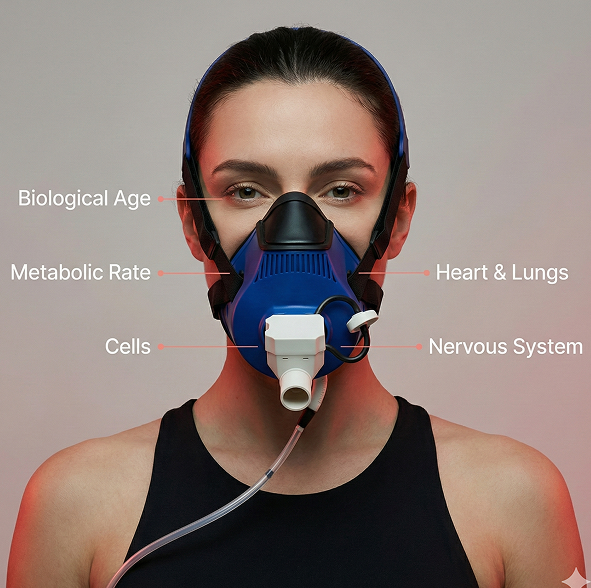
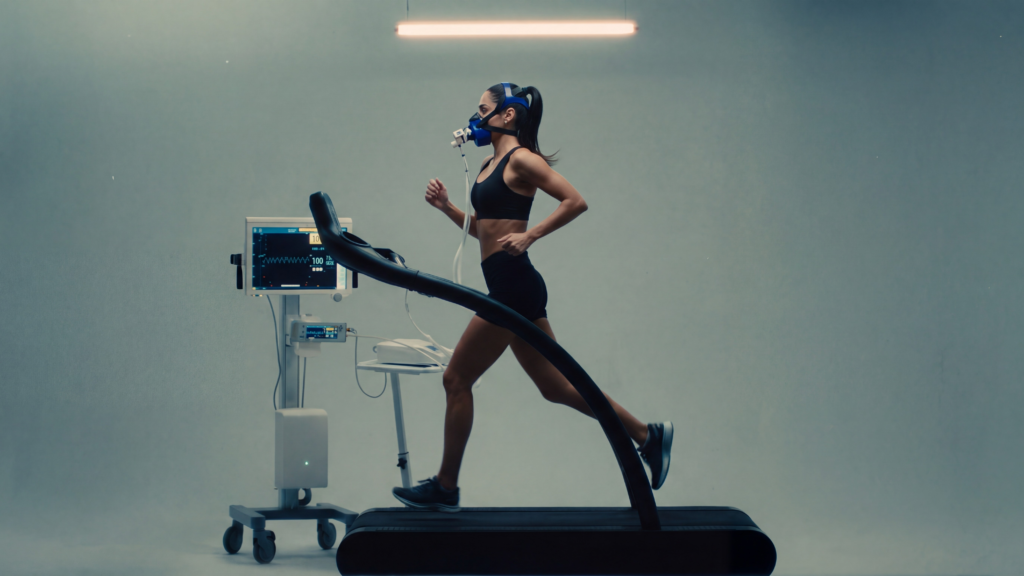
PNOĒ focuses on breath-based metabolic testing, a clinical-grade method used to assess how your body produces energy.
Through a simple breath protocol, PNOĒ can measure:
- Resting metabolic rate (how many calories you actually burn)
- Fat vs carbohydrate utilization
- Metabolic efficiency and flexibility
- Oxygen consumption and ventilatory response
These metrics answer questions that nutrition alone cannot:
- Are you burning fat efficiently or defaulting to carbs?
- Is your metabolism resilient or under strain?
- Does your recovery strategy actually shift your system out of stress?
PNOĒ reveals physiological responses.

The Invisible Alignment: Foundations + Feedback
This is where the alignment becomes clear.
Momentous and PNOĒ operate on the same core belief:
You should support the body’s systems first and adjust based on real signals, not assumptions.
- Momentous provides high-quality, system-level nutritional support
- PNOĒ provides objective feedback on how the system responds
One focuses on what supports human performance.
The other focuses on how human performance adapts.
Neither replaces the other. They address different sides of the same equation.
Energy Availability: A Shared Priority
Momentous highlights energy availability as a cornerstone of performance and recovery. Eating enough calories does not guarantee sufficient energy availability, especially under training or life stress.
PNOĒ complements this by showing:
- Whether your resting metabolism is suppressed
- Whether fuel intake matches actual energy demands
- Whether your body compensates by becoming inefficient
Together, these perspectives shift the question from:
“Am I eating enough?”
to:
“Is my body actually supported?”
Recovery, Stress, and the Nervous System
Momentous places strong emphasis on recovery, sleep quality, and nervous system balance, recognizing that adaptation happens during recovery, not effort.
PNOĒ adds another layer by detecting:
- Stress-driven breathing patterns
- Inefficient ventilatory responses
- Signs of poor recovery before symptoms appear
This makes recovery less subjective and more measurable.
Longevity Is Not a Supplement – It’s a Trajectory
Momentous frames longevity as sustaining performance across life stages, not chasing youth or extremes. PNOĒ aligns by enabling longitudinal metabolic tracking:
- Changes in fuel utilization over time
- Declines or improvements in metabolic efficiency
- Early functional shifts that precede disease or burnout
Longevity, in this context, becomes something you monitor, not guess.

Why This Matters for Everyday People
You don’t need to be an elite athlete to benefit from this way of thinking.
This alignment matters for:
- Busy professionals with low energy
- Fitness enthusiasts stuck despite doing everything “right”
- Individuals focused on long-term health, not quick fixes
It reframes health from a checklist into a feedback-driven process.
The Takeaway: Support First. Measure Second. Adjust Intelligently.
Momentous and PNOĒ don’t need to be bundled to work together conceptually.
They already align on a deeper level:
- Support the system
- Respect physiology
- Prioritize long-term resilience
- Remove guesswork
When nutrition philosophy and metabolic measurement move in the same direction, the result isn’t hype or shortcuts; it’s clarity.
And clarity is what most people are missing.
Related Posts
CGM vs Metabolic Testing: What’s the Difference?

Insulin Resistance Testing & Breath Analysis

Mitochondrial Health: The Foundation of Energy and Longevity