
Advanced VO2 Max & Breath Analysis for Healthcare Professionals
PNOĒ delivers clinical-grade VO2 Max testing through advanced metabolic testing, offering a non-invasive, lab-grade method for personalized client health programs. In just 8 minutes, PNOĒ measures 23 key biomarkers to assess biological age, metabolic rate, fat burn, and respiratory efficiency—giving you a complete view of each client’s physiology.
A non-invasive, instant, and accurate view of human physiology.
Breath analysis is the only method known to science for reliably measuring aerobic metabolism and all the systems involved in it through biomarkers such as VO2 max, metabolic rate, and fat burn. This makes it the cornerstone test for every critical system of our body.


Independently Validated Clinical-grade accurancy & Trusted by Leaders for Scientiific Research


The PNOĒ device
PNOĒ is the world’s first breath analysis device that’s portable, easy to use and delivers clinical-grade precision.
The Breath Biomarkers Behind Every Insight
Each outcome PNOĒ delivers is grounded in measured breath biomarkers, not estimates.
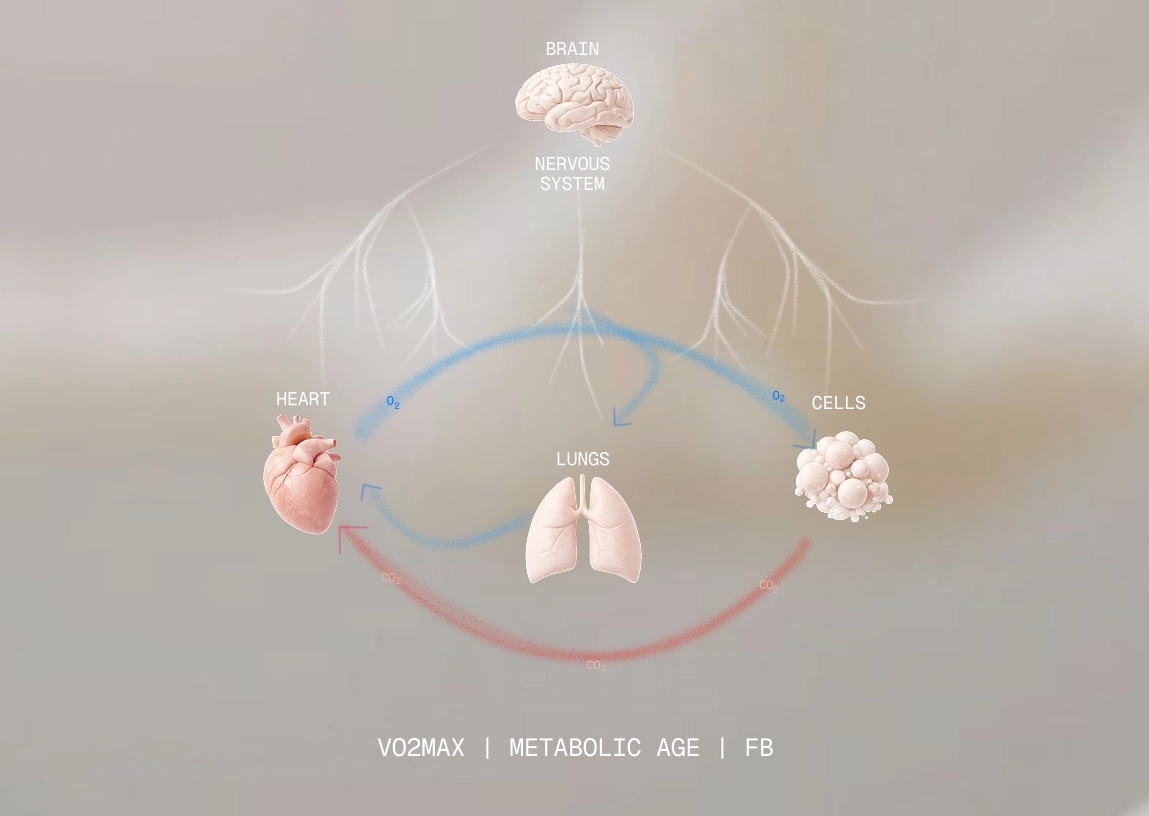
By analyzing oxygen uptake (VO2), carbon dioxide production (VCO2), ventilation dynamics, respiratory exchange ratio (RER), and metabolic thresholds, PNOĒ captures how the heart, lungs, and cells respond to metabolic demand. These biomarkers are interpreted collectively to identify patterns linked to biological aging, cardiometabolic risk, metabolic flexibility, and performance capacity.
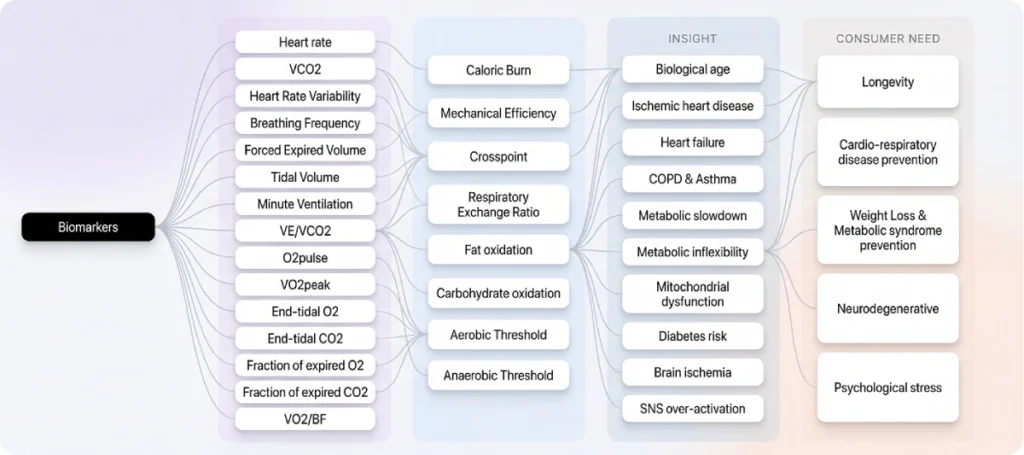
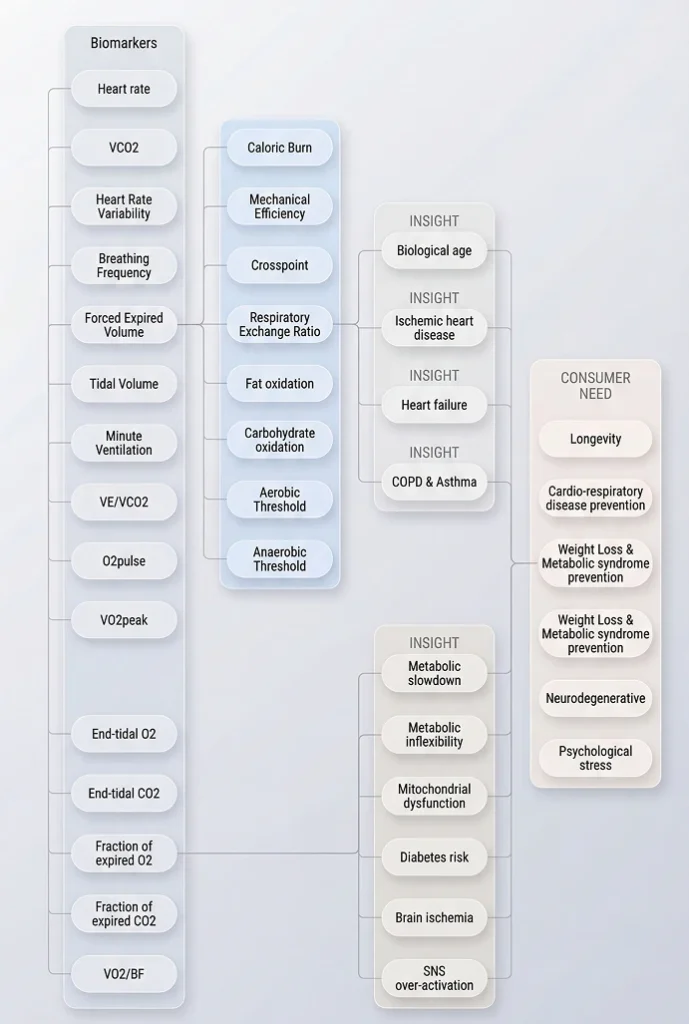
This biomarker-to-insight framework allows healthcare professionals to connect physiological signals to practical decisions, turning breath data into targeted programs for longevity, disease prevention, weight management, and training optimization.
FAQs
How often should I re-test cardiometabolic metrics?
Every 6–12 weeks to quantify adaptations in VO2peak, ventilatory efficiency (VE/VCO2), fuel utilization (RER), and breathing mechanics (VT Peak).
Are these tests suitable for beginners and clinical populations?
How does imporving VO2peak impact longevity?
Whats the link between Resting RER and weight management?
How do VT Peak and VE/VCO2 help people with breathing issues or athletes?
Which industries/verticals benefit most from these metrics?
- Endurance & sports performance: VO2peak, VT Peak, VE/VCO2 for race‑day economy.
- Weight‑loss & metabolic clinics: Resting RER for fat‑oxidation profiling and nutrition periodization.
- Pulmonary rehab & respiratory therapy: VT Peak, VE/VCO2 for breathing mechanics and ventilatory control.
- Corporate wellness & longevity programs: Biological age as an integrative KPI for healthspan.