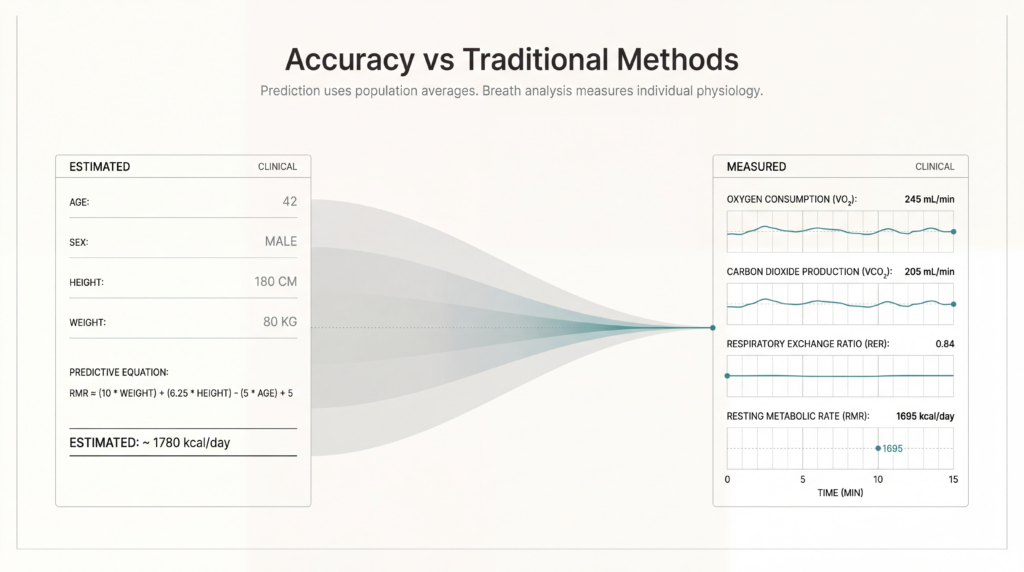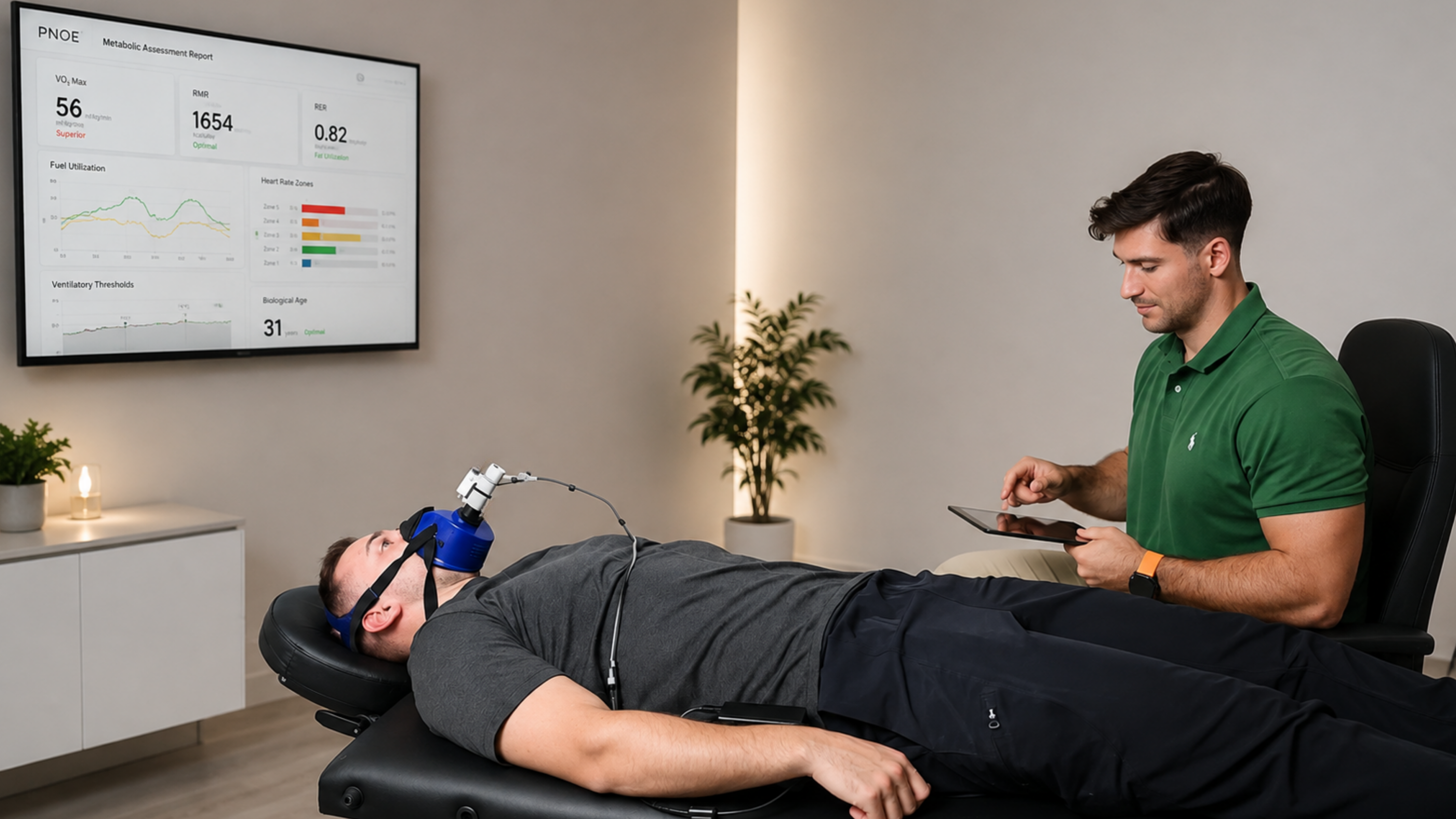
Successful metabolic testing implementation requires more than purchasing a new piece of equipment. The service must fit naturally into your existing workflow, staff responsibilities, client journey, and follow-up model.
Indirect calorimetry uses respiratory gas exchange to assess energy expenditure and fuel utilization. During exercise, metabolic testing can also provide information about oxygen consumption, ventilation, exercise capacity, and the body’s response to increasing workloads. These measurements can support more personalized decisions in weight management, performance, rehabilitation, and longevity care.
The technology matters, but implementation determines whether metabolic testing becomes an occasional assessment or a scalable, integrated part of your facility.
Start With the Purpose of Metabolic Testing
Before choosing protocols or building packages, define the problem you want metabolic testing to solve.
A weight-management clinic may primarily want to measure resting metabolic rate and better understand a client’s energy needs. A sports-performance facility may be more interested in VO2 Max, ventilatory thresholds, fuel utilization, and individualized training zones. A longevity clinic may want to combine resting and active testing to evaluate cardiorespiratory fitness, metabolic health, and progress over time.
Clarifying the purpose keeps the service focused. It also prevents your team from collecting a large amount of data without knowing how that information should influence the next clinical or coaching decision.
Begin by answering three questions:
- Which clients will benefit most from testing?
- Which decisions will the results help your team make?
- Which existing services will the assessment support?
The answers should guide everything from staff training and service design to pricing and promotion.
Choose a Clear Initial Service
Practices often make implementation more difficult by launching too many testing options at once. A more effective approach is to begin with one or two clearly defined services.
For example, a clinic could launch a resting metabolic assessment for clients entering a weight-management program. The result would be reviewed during a consultation and used to support nutrition planning, activity recommendations, and future retesting.
A gym, performance center, or longevity facility might instead begin with an active metabolic assessment. The service could include VO2 Max testing, training zones, fuel-utilization insights, a results consultation, and a personalized training plan.
Once the team is comfortable with the workflow, the facility can introduce combined assessments, memberships, corporate testing, athlete packages, or specialized care pathways.
Starting with a focused service makes it easier to train staff, explain the value to clients, and identify what needs to be improved before expanding.
Design the Complete Client Journey
The assessment itself may take relatively little time, but the value of the service is created before and after the test.
A strong client journey begins with screening and preparation instructions. It continues through the assessment, data-quality review, results consultation, and personalized plan. It should then include progress monitoring and a defined reason to return.
A typical journey may follow this sequence:
- Initial screening and goal assessment
- Pre-test preparation
- Resting or active metabolic assessment
- Data-quality review
- Results consultation
- Personalized nutrition, training, or recovery plan
- Follow-up and retesting
Each stage should have a clear owner.
Front-desk staff may manage scheduling and preparation instructions. A trained staff member may conduct the PNOĒ test, while a coach, dietitian, clinician, or other qualified professional may interpret the results within their scope and connect them to an appropriate plan.
Without a defined process, clients can receive a detailed report but leave without understanding what the results mean or what they should do next.
Standardize Your Testing Conditions
Consistency is essential when metabolic results will influence recommendations or be compared over time.
For resting metabolic rate testing, recent food intake, exercise, caffeine, nicotine, environmental conditions, posture, stress, and the client’s ability to reach a resting state may influence the measurement. Evidence-based guidance therefore recommends standardized preparation and a stable measurement period.
Active testing requires equally clear procedures. Your team should understand client screening, equipment preparation, protocol selection, exercise progression, monitoring, test-termination criteria, and recovery.
Create written operating procedures that cover:
- Client eligibility and screening
- Pre-test preparation
- Equipment checks
- Test selection
- Data-quality review
- Safety and termination criteria
- Documentation
- Result interpretation
- Retesting conditions
These procedures do not need to make the service complicated. Their purpose is to ensure that each client receives a consistent experience and that repeat results can be compared more meaningfully.
Cardiopulmonary exercise-testing guidance also emphasizes the importance of appropriate equipment, trained personnel, protocol selection, monitoring, interpretation, and quality assurance.
Train Staff Beyond Device Operation
Knowing how to operate the metabolic analyzer is only one part of staff training.
Your team should also understand what the measurements mean, which conclusions can reasonably be drawn, and how to communicate the findings without overwhelming the client.
A good consultation should answer four practical questions.
What did the assessment reveal?
The practitioner should identify the most important findings rather than reading every metric in the report.
Why does the result matter?
The findings should be connected to the client’s goals, symptoms, limitations, or current program.
What should change?
The client should leave with a small number of clear, realistic priorities.
When should progress be reviewed?
The next consultation or retest should be positioned as part of the program rather than an optional afterthought.
Clients do not need a lecture on respiratory physiology. They need to understand how their results affect their nutrition, training, recovery, or long-term health strategy.
Connect Results to Existing Services
Metabolic testing creates the most value when it improves the services your facility already provides.
A low level of aerobic fitness may support a more structured cardiovascular training plan. Resting metabolic data may inform nutrition planning. Fuel-utilization patterns can help shape exercise intensity and nutritional timing. Ventilatory thresholds can create more individualized training zones than generalized formulas based on age or estimated maximum heart rate.
The results can also help your team connect clients with appropriate services such as:
- Nutrition coaching
- Personal training
- Weight-management programs
- Recovery support
- Longevity programs
- Rehabilitation
- Supplementation
- Other professionally appropriate wellness services
The assessment should not be used to manufacture a reason to sell every available service. Responsible implementation means using the data to recommend what is relevant to the client’s measured needs and goals.
When testing and service delivery are properly connected, clients can understand why a recommendation has been made and how its effectiveness will be evaluated.
Make Retesting Part of the Program
A metabolic assessment provides a snapshot. Retesting helps determine whether an intervention is producing meaningful physiological change.
The timing should depend on the client, the measurement, and the program. A structured training block may require a different retesting interval from a weight-management, rehabilitation, or long-term wellness intervention.
The most important requirement is consistency. Preparation, equipment, exercise modality, protocol, and testing conditions should be as similar as reasonably possible to those used during the original assessment.
Retesting also creates a natural opportunity to reassess goals, review adherence, update the program, and decide what should happen next.
Rather than presenting retesting as another isolated transaction, position it as part of an ongoing measurement and improvement process.
Build a 90-Day Metabolic Testing Implementation Plan
A phased launch gives your team time to test the workflow, build confidence, and resolve operational issues before promoting the service more widely.
Month One: Build the Foundation
During the first month, define the service, target audience, pricing, workflow, and staff responsibilities.
Decide whether you will initially offer resting testing, active testing, or a combined service. Create your client preparation instructions, screening process, consultation structure, and follow-up pathway.
Test the complete journey internally. Look for points where clients may become confused or where team members need additional support.
Month Two: Run a Controlled Launch
During the second month, begin with a limited number of clients.
Review every stage of the experience, including scheduling, preparation, mask fitting, testing time, report delivery, consultation quality, and follow-up.
Gather feedback from both clients and staff. Use what you learn to improve documentation, simplify the workflow, and make the results easier to explain.
Month Three: Expand and Measure
During the third month, begin broader promotion and establish clear performance metrics.
Track more than the number of assessments completed. Review:
- Assessment bookings and attendance
- Consultation completion
- Program conversion
- Average revenue per tested client
- Follow-up participation
- Retesting rate
- Client feedback
- Staff time per assessment
This information will show whether the service is operating efficiently and whether clients are moving from measurement to meaningful action.
A phased approach is usually more sustainable than promoting the service widely before the team has developed a repeatable process.
How PNOĒ Simplifies Metabolic Testing Implementation
PNOĒ is designed to make metabolic testing implementation faster and easier for clinics, gyms, wellness centers, and performance facilities.
PNOĒ itself does not require a specific clinical credential to operate the system. Following onboarding, a trained staff member can conduct an assessment using its guided workflow, quick setup, and user-friendly software.
The appropriate professional for screening, interpretation, medical decision-making, or higher-risk exercise testing still depends on the client population, local regulations, professional scope of practice, and the services being delivered.
PNOĒ also connects testing with detailed reporting, personalized nutrition and training plans, client monitoring, and retesting workflows. This helps facilities move beyond simply delivering an assessment and build a complete service around the information it provides.
PNOĒ has been evaluated in peer-reviewed studies comparing its respiratory gas measurements with established metabolic-analysis systems. The published research supports its validity and reliability for measuring respiratory gas exchange under the conditions studied.
Frequently Asked Questions
Who should perform metabolic testing in a clinic?
With PNOĒ, no specialized clinical credentials are required to operate the system. Its guided workflow, quick setup, and user-friendly software allow any trained staff member to perform an assessment confidently after onboarding.
For medical or higher-risk exercise testing, facilities should still follow local regulations, client-screening requirements, and any applicable supervision or scope-of-practice guidelines.
Should testing be offered as a standalone service?
It can be, particularly as an entry point for new clients. However, the assessment usually creates more value when it includes interpretation, personalized recommendations, follow-up, and a retesting plan.
How should a clinic promote metabolic testing?
Lead with the problem the assessment helps solve rather than the technology alone. Explain how the information can support more personalized decisions in weight management, performance, recovery, or longevity.
How long does it take to introduce metabolic testing?
The timeline depends on the facility, staff, service model, and client population. A focused service with defined protocols can be introduced relatively quickly, while a more complex medical or multi-location program may require additional operational, clinical, or compliance planning.
A controlled 90-day launch gives most facilities time to develop the workflow, train staff, test the client experience, and begin measuring performance.
Does every client need both resting and active testing?
No. The appropriate assessment depends on the client’s goals and the question the practitioner wants to answer.
Resting testing may be most relevant for nutrition and weight-management planning. Active testing may be more appropriate for VO2 Max, exercise capacity, fuel utilization, and individualized training zones. Some clients may benefit from a combined assessment.
Turn Metabolic Testing Into a Complete Service
Effective metabolic testing does not end when the assessment is complete. Its greatest value comes from connecting reliable measurements with clear interpretation, personalized recommendations, follow-up, and retesting.
A thoughtful metabolic testing implementation plan helps your team deliver a consistent client experience while making the service easier to operate, explain, and scale.
PNOĒ brings the device, software, reporting, personalized programming, onboarding, and ongoing support together in one platform, helping your facility turn metabolic data into a complete client journey.
See How PNOĒ Fits Into Your Facility
Sources
- Indirect Calorimetry to Measure Metabolic Rate and Energy Expenditure – PubMed
- Evidence Analysis Library Review of Best Practices for Performing Indirect Calorimetry
- ATS/ACCP Statement on Cardiopulmonary Exercise Testing – PubMed
- ARTP Statement on Cardiopulmonary Exercise Testing 2021 – PubMed
- Validity and Reliability of the PNOĒ Portable Metabolic Analyzer
- 2025 PNOĒ Validity and Reliability Study – PubMed
Related Posts

Mitochondrial Health: The Foundation of Energy and Longevity

Does Methylene Blue Work? How to Actually Measure the Effect